

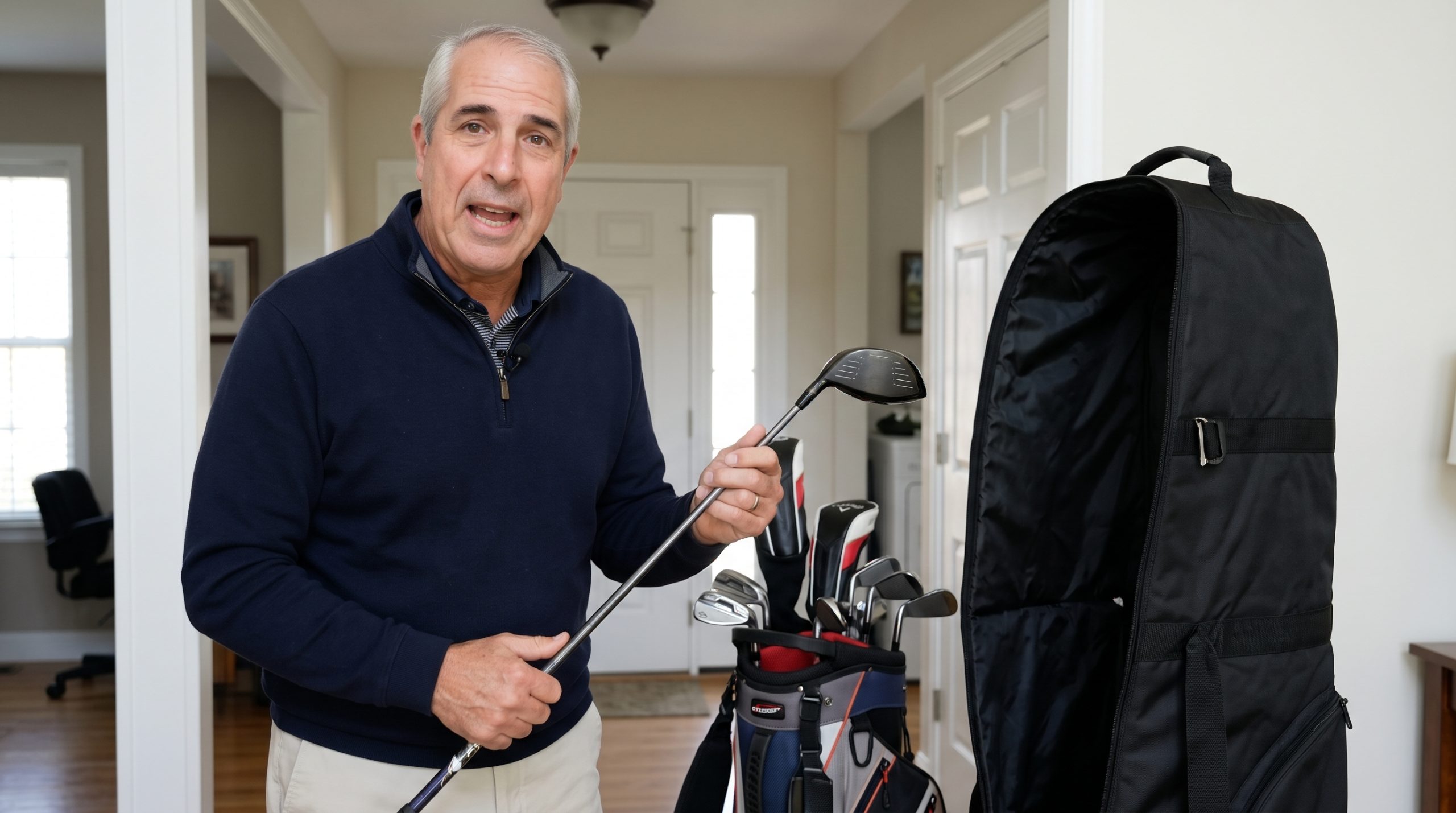
Try these common travel tips before your next golf getaway.
Before you check your bag for Thanksgiving or winter golf travel, make sure a preventable packing error doesn’t turn your first tee time into a trip to the pro shop.
The weeks surrounding Thanksgiving and the winter holidays represent the busiest air-travel stretch of the year, and for golfers escaping cold weather for sunnier fairways, the airport terminal is often the toughest hazard on the itinerary. Packed cargo holds, rushed ground crews, tight connecting flights, and heavy holiday luggage create a high-risk environment for delicate graphite shafts and precision-milled clubheads.
Yet most travel damage isn’t caused by freak accidents—it happens because golfers pack their bags for the airport the same way they load them into the trunk of a car. A few minutes of preparation at home can mean the difference between striping your opening drive on vacation and dealing with a snapped driver shaft at baggage claim.
1. Leaving Adjustable Clubheads Attached to Their Shafts
Modern drivers, fairway woods, and hybrids are the longest clubs in your bag, which means they sit higher than your irons and absorb the brunt of any top-down impact when luggage is stacked or dropped upright. Because almost every modern metalwood features an adjustable hosel adapter, leaving the head attached creates unnecessary leverage at the weakest point of the shaft.
How to fix it: Use your manufacturer’s torque wrench to unscrew removable heads before you zip up your travel cover. Wrap each clubhead in its headcover or a soft garment and stow them safely inside your carry-on bag or a heavily padded inner pocket. Place the bare shafts back into your golf bag adapter-side down so the delicate tips rest securely at the bottom of the bag.
2. Traveling With a Soft-Sided Bag Without a “Stiff Arm”
Soft-sided travel bags are lightweight, easy to store, and fit comfortably inside mid-size rental cars—which is why most traveling golfers prefer them over bulky hard cases. On their own, however, soft bags offer zero vertical crush protection when heavy suitcases are piled on top of them in an aircraft cargo bin.
How to fix it: Invest in a telescoping stiff arm (also called a club protector or backbone pole). Adjust the pole so its dome extends one to two inches above the tallest remaining club in your bag. If the bag is dropped or stacked end-first, the aluminum shaft of the stiff arm absorbs the impact instead of your graphite shafts.
3. Allowing Iron Heads to Clatter Unrestrained
Even when clubs are protected from top-down crushing, horizontal jostling on conveyor belts, sorting chutes, and tarmac baggage carts causes iron heads to slam repeatedly against one another. Over a multi-leg flight, that constant vibration leads to deep bag chatter, dinged toplines, and bent loft or lie angles.
How to fix it: Weave one or two thick bath or beach towels tightly through the gaps between your iron heads to act as a cushion. Once the heads are separated, wrap a bungee cord, Velcro strap, or your bag’s rain hood snugly around the entire bundle so the shafts cannot shift or rattle in transit.
4. Overstuffing Pockets and Exceeding the 50-Pound Weight Limit
When checked-bag fees climb during the holidays, it is tempting to treat your golf travel bag like a second suitcase by cramming extra shoes, rain gear, and three dozen golf balls into every zippered compartment. Not only does a dense stash of golf balls add surprising weight—pushing your bag past the standard 50-pound airline threshold—but an overly heavy bag is also far more likely to be dropped or tossed roughly by baggage handlers.
How to fix it: Weigh your fully packed travel cover on a luggage scale or bathroom scale before leaving for the airport, keeping the total under 50 pounds (or lower if you are flying a budget carrier with stricter limits). Pack heavy items like extra boxes of golf balls and shoes in your standard checked suitcase or carry-on instead.
5. Signing Airline Damage Waivers Blindly—and Skipping a Tracker
Many travelers don’t realize that checking a golf bag in a soft-sided cover usually requires signing or accepting a limited release waiver at the ticket counter. Under those terms, airlines often disclaim liability for broken shafts or crushed clubheads unless the clubs are packed in an approved hard-shell case. Furthermore, holiday hub delays frequently separate oversized luggage from passenger flights.
How to fix it: Drop a Bluetooth tracker (such as an Apple AirTag or Tile) inside an interior pocket so you can verify your clubs made the plane before takeoff. Just as importantly, unzip your bag and inspect every shaft and clubhead at the oversized baggage carousel before leaving the terminal—once you walk out of the airport, filing a valid damage claim becomes nearly impossible.
Key Points to Remember When Traveling With Clubs
. Disassemble what you can: Detach adjustable driver, fairway wood, and hybrid heads and store shafts tip-down.
. Create a rigid spine: Always pair a soft-sided travel cover with an extended stiff arm taller than your longest club.
. Immobilize the set: Weave towels through your irons and strap the shafts together to eliminate movement.
. Watch the scale: Keep total bag weight under 50 pounds to avoid overweight fees and rough handling.
. Track and inspect immediately: Place a tracker inside your bag and check your clubs at baggage claim before exiting the airport.
Protecting your golf clubs doesn’t require an expensive overhaul of your travel gear—just a smarter packing routine before you head to the terminal. By removing vulnerable clubheads, reinforcing your travel bag with a stiff arm, cushioning your irons, and keeping the overall weight manageable, you eliminate the exact pressure points that cause transit damage. Take fifteen extra minutes to pack deliberately at home, and your clubs will arrive at your destination ready to perform from the very first swing.