

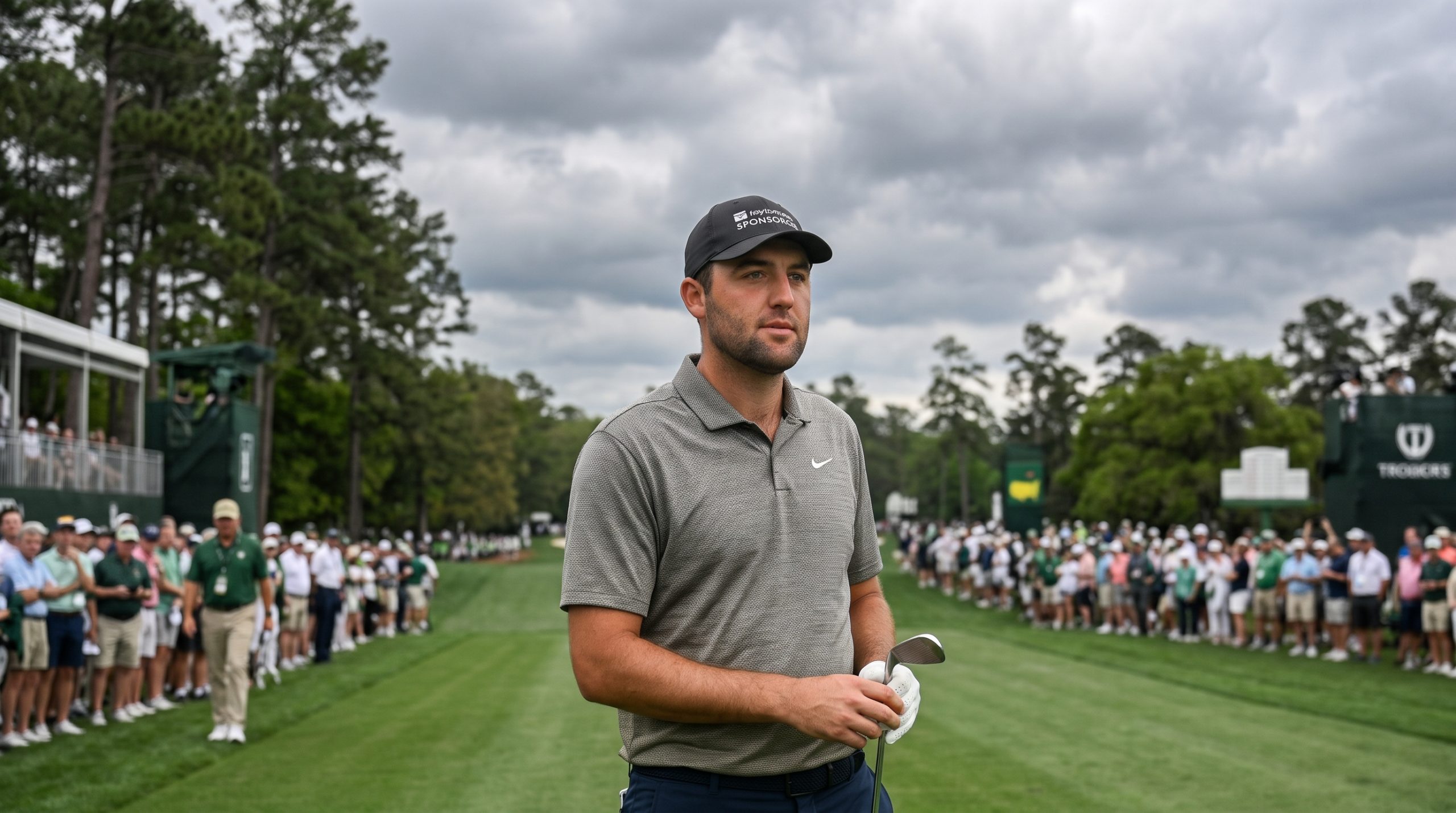
Inside the chaotic swing, unshakable mindset, and grounded life of golf’s most unassuming superstar.
If you were to build the archetype of a modern, world-dominating athlete, you might engineer someone with a manufactured brand, a mathematically flawless technique, and a voracious appetite for legacy debates. Scottie Scheffler is none of those things. Yet, as he continues to casually dismantle the PGA Tour—recently adding his second FedExCup title to a historic run of 22 career victories—he has left fans, analysts, and fellow players searching for answers. How exactly is the World No. 1 breaking the toughest fields in golf with such alarming consistency? Scheffler doesn’t look like a golfing cyborg, and he certainly doesn’t talk like one.
To understand the massive gap between his unassuming demeanor and his historic, week-in, week-out dominance, we have to look past the Sunday trophy presentations and dig directly into the distinct mechanics, the unshakable mindset, and the quiet off-course foundation of golf’s most fascinating outlier.
The Swing That Defies Convention
To the untrained eye, Scheffler’s swing looks like a beautiful accident. His distinct footwork—specifically the dramatic “sliding” of his feet through impact—looks more like a man slipping on the ice than a professional golfer anchoring a 300-yard drive. But look past the feet and focus on the hands. Observers and elite swing analysts consistently marvel at his ability to find the perfect impact position while his feet dance across the tee box.
“While his lower body dances, his clubface remains remarkably stable, yielding a freakish level of control and a microscopic 10-yard window.”
This unique combination works because he relies on specific core mechanics that defy traditional instruction but perfectly optimize his natural talent:
- Chaotic Footwork with a Purpose: The slide acts as a release valve for his tremendous rotational force, saving his lower back from the violent torque that plagues modern, textbook players.
- Neutral Hand Position: By keeping his hands incredibly neutral, he removes timing dependency from his release, allowing for a much larger margin of error.
- Flat Left Wrist: Through the hitting zone, his remarkably flat left wrist ensures the clubface remains square for an extended period, creating unparalleled ball-striking consistency week after week.

The Pure Athlete Beneath the Khakis
Long before golf fully took over his life, Scheffler was a multi-sport standout. It is easy to look at his easygoing, dad-bod-adjacent demeanor on the fairways and completely forget that there is a hyper-competitive, elite athlete operating underneath the surface.
Growing up, he excelled across the board, particularly on the basketball court. In a now-legendary piece of Scheffler lore, he once sank 30 consecutive three-pointers. That elite hand-eye coordination and spatial awareness on the hardwood translated directly to his otherworldly touch on the greens and out of the heavy rough. He is not steering the golf ball mechanically; he is reacting to targets athletically, relying on deeply ingrained fast-twitch instincts that cannot be taught on a driving range.

“Being Where His Feet Are”
In an era where athletes are hyper-aware of their brand and their historical standing, Scheffler is stubbornly present. His entire sports psychology boils down to a startlingly simple mantra: Be where your feet are.
He famously dislikes speculative press conferences and politely refuses to engage in legacy debates or “what-if” scenarios regarding his place in golf history. While other players might project their minds to the 18th green trophy presentation while teeing it up on Thursday morning, Scheffler remains locked in the present tense.
- Zero Future Projection: There is no past, there is no future; there is only the exact yardage of the next shot and the wind in his face.
- Absolute Present Focus: By refusing to dwell on a bad bogey or anticipate a future birdie, he completely neutralizes the compounding, suffocating pressure of tournament golf.

An Anchored Life
Unlike the flashy, hyper-marketed superstars of the modern sports era, Scheffler’s inner circle is remarkably tight and incredibly stable. He is heavily anchored by his long-time coach Randy Smith, who has worked with him since childhood, and his veteran caddie, Ted Scott. More importantly, he is entirely grounded by his family—having met his wife, Meredith, in high school, and now balancing tour life with their two young children.
Perhaps the most crucial element of his success is his deeply philosophical view of his profession. Scheffler is anchored by his faith and has openly stated that being a professional golfer is “not a fulfilling life”.
“Golf is simply what he does, not who he is. When your self-worth isn’t riding on a four-foot putt, the hole suddenly looks a lot bigger.”
By explicitly stating that his faith and family come first, and golf ranks third, he strips the game of its existential weight. He keeps the sport in a healthy, low-key perspective, preventing the inevitable bad rounds from shattering his confidence and allowing him to play with unparalleled freedom.
The Final Read: Frictionless Dominance
After three decades analyzing elite golf, my theory on Scheffler’s dominance is simple: it’s a byproduct of absolute friction-loss. Most World No. 1s eventually burn out under the mental weight of the target on their back. Scheffler doesn’t, because his identity isn’t tethered to his ranking. Can he maintain this pace? Absolutely. Built on athletic rhythm rather than violent torque, and treating golf as a joyful outlet rather than a spiritual proving ground, his burnout factor is nearly zero. Barring catastrophic injury, Scheffler won’t just keep pace—he will define this entire era of the sport.
