

Golf programs have lots of hazards, however the activity on its own isn’t risky. It’s certainly not fast like auto racing or even high-impact like the NFL. While you might modify your spine or even bind a hand, the danger of long-term injury is actually vanishingly reduced.
So why, when you participate in, are you therefore frequently terrified?
Christopher Johnson has actually long duke it outed the inquiry. A GOLF Top 100 Teacher that has actually been actually a coach for greater than 35 years, Johnson recognizes that audio auto mechanics can easily relax the heebie-jeebies (it’s certainly not a poor suggestion to take a course!), and also psychological toughness may be a remedy (nothing at all incorrect along with viewing a sporting activities psycho therapist!). However he feels reaching the resource of worry and also pain occasionally calls for going deeper.
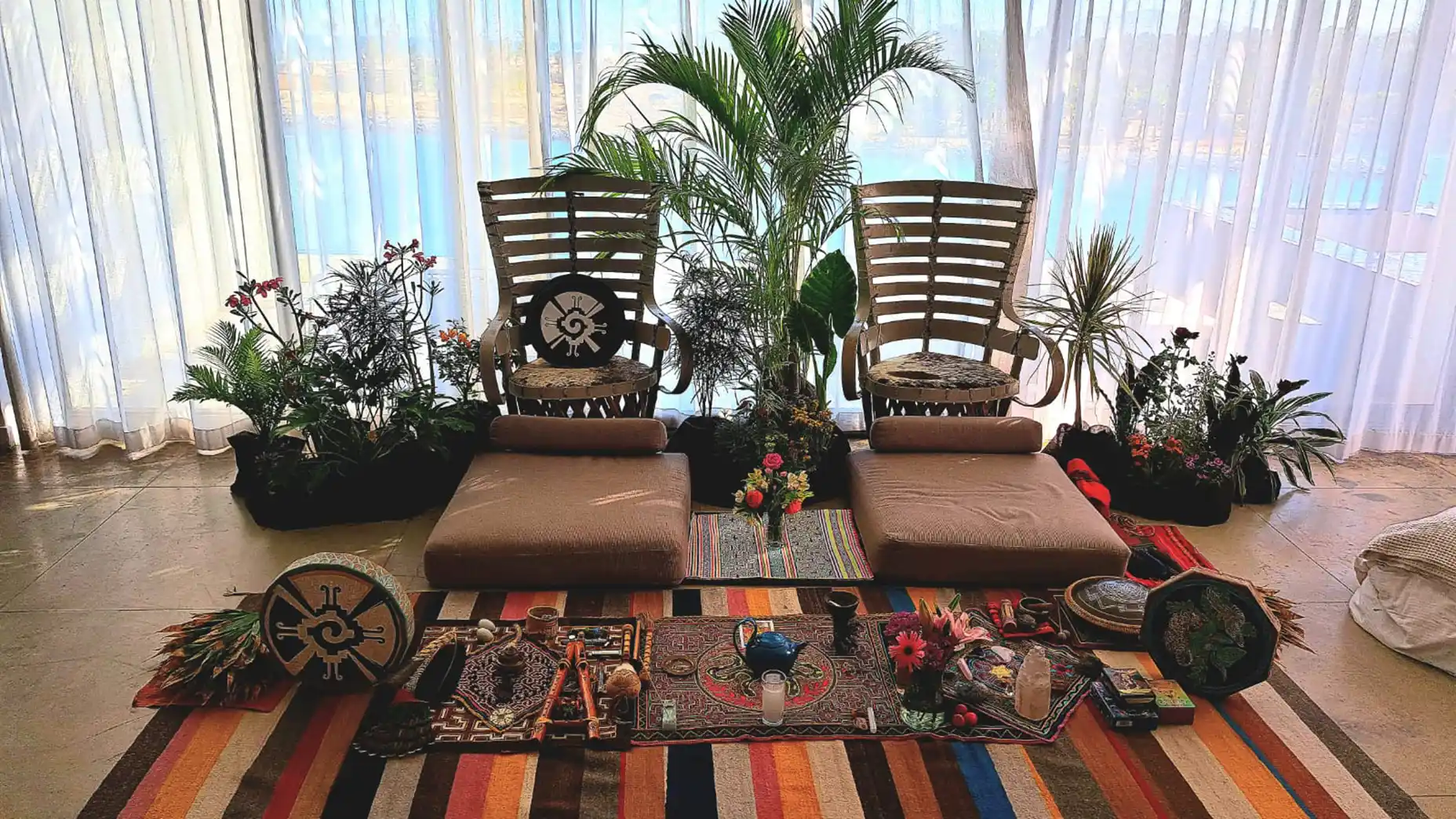
That’s where ayahuasca happens in.
Aya-what-now? Ayahuasca is actually an experimental herbal tea steeped coming from vegetations belonging to the Amazon.com rainforest, utilized in metaphysical and also recuperation services through Native societies for centuries, long prior to golf was actually a twinkle in a Scottish guard’s eye.
Smith first tried the ancient medicine (“It’s not meant to be a recreational drug,” he says) in the early 2010s as part of a journey of self-exploration. He saw its mind-expanding, spiritually cleansing potential, and over time recognized how it might pair with the skills of his trade. Since 2023, he has run retreats that combine traditional ayahuasca ceremonies with traditional golf instruction. He now offers two or three a year.
The logic, as Johnson sees it, is that golf’s biggest obstacles are internal: thoughts, feelings, emotions, expectations, many of them stashed in the subconscious, beyond the reach of conventional treatments. Ayahuasca, he says, can help players tap into that realm, work through past negative experiences and traumas, and replace detrimental thought patterns with more functional ones.
If that all sounds woo-woo, consider that numerous clinical trials have demonstrated ayahuasca’s healing potential.
Because the brew can interact dangerously with certain medications and health conditions, Smith pre-screens candidates to ensure they qualify. And while ayahuasca is illegal in the U.S., that’s not on obstacle on his retreats: They take place in Mexico.
These are not roughing-it escapes into the jungle. Guests stay five nights at a luxe seaside home in Los Cabos with an expert ayahuasca practitioner on site around the clock. Access to Puerto Los Cabos Golf Club is included. The schedule features three ceremonies led by a shaman, an 18-hole evaluation round round under Smith’s watch, and continued on- and off-course coaching through the stay.
The effects of ayahuasca can linger for six or more hours, and the ceremonies are scheduled accordingly. Participants are given their own personal indoor space to soak up the experience safely, with seasoned practitioners supervising. The point is not to play golf on ayahuasca but to transfer the benefits of ayahuasca onto the course.
Like golf shots, Smith says, retreats are best approached with clear intention. Guests arrive with different goals. Some are literally stuck with their golf swings. Others are stuck elsewhere in their lives, trapped in bad relationships or unhealthy habits, prone to self-sabotage or self-rebuke. Smith encourages participants to think carefully about what they’re after in advance, with the proviso that, as with golf, no specific outcome is guaranteed. “Everyone gets something different out of it,” Smith says. “But generally what we’ve seen is people coming away more fearless, kinder to themselves, more compassionate and freer.”
What starts with a medicinal tea is meant to carry over to the to begin with tee and beyond. The next retreat runs Nov. 17-22. The price $8,999 per person. You can learn more here.
3 things I’m thinking
Laying down the tee-booking law: Much like bots, third-party brokers have been the bane of municipal tee time booking systems in recent years: snatching up reservations and reselling them at an up-charge. What to do about them? California has passed a law. Signed this week by Gov. Gavin Newsom, the legislation bans middlemen from listing, selling or handing off tee times at publicly owned courses without the course operators permission. Tee time brokers in Los Angeles were the main target here; that’s where they’ve caused the highest-profile problems. But the law applies across the state and all of its own 200-some munis.
Dye is cast at PGA National: PGA National Resort, the South Florida stay-and also-play staple that has staged a Ryder Cup, a PGA Championship and continues to host the PGA Tour is adding Triple Stick Golf Club, a new members-only course from Love Golf Design. With plenty of water to work into the routing and artistic license to chose a style suited to the site, lead architect Scot Sherman, a longtime Pete Dye collaborator, went Dye-inspired, with railroad-tie bulkheads, flat-bottomed bunkers and par-5s closing both nines of the par 70. The name nods to both Crooked Stick (a famous Dye design) and Davis Love III’s boyhood nickname, “Tripp.”
A failing grade for Yale: A feature in The Athletic has put Yale Golf Course back in the (unflattering) spotlight, laying bare maintenance issues that have reportedly bedeviled the celebrated C.B. Macdonald/Seth Raynor design since it reopened this year after a $30 million Gil Hanse-led renovation. Criticism of the university’s stewardship of the layout is nothing new; golf junkies have long grumbled about what they’ve depicted as a combination of mismanagement and neglect. That grousing, though, has largely been confined to nerdy golf circles. You can’t help but wonder if this wider-spread attention in a prominent national publication might lead to more lasting change in exactly how the school cares for its famous training course.