

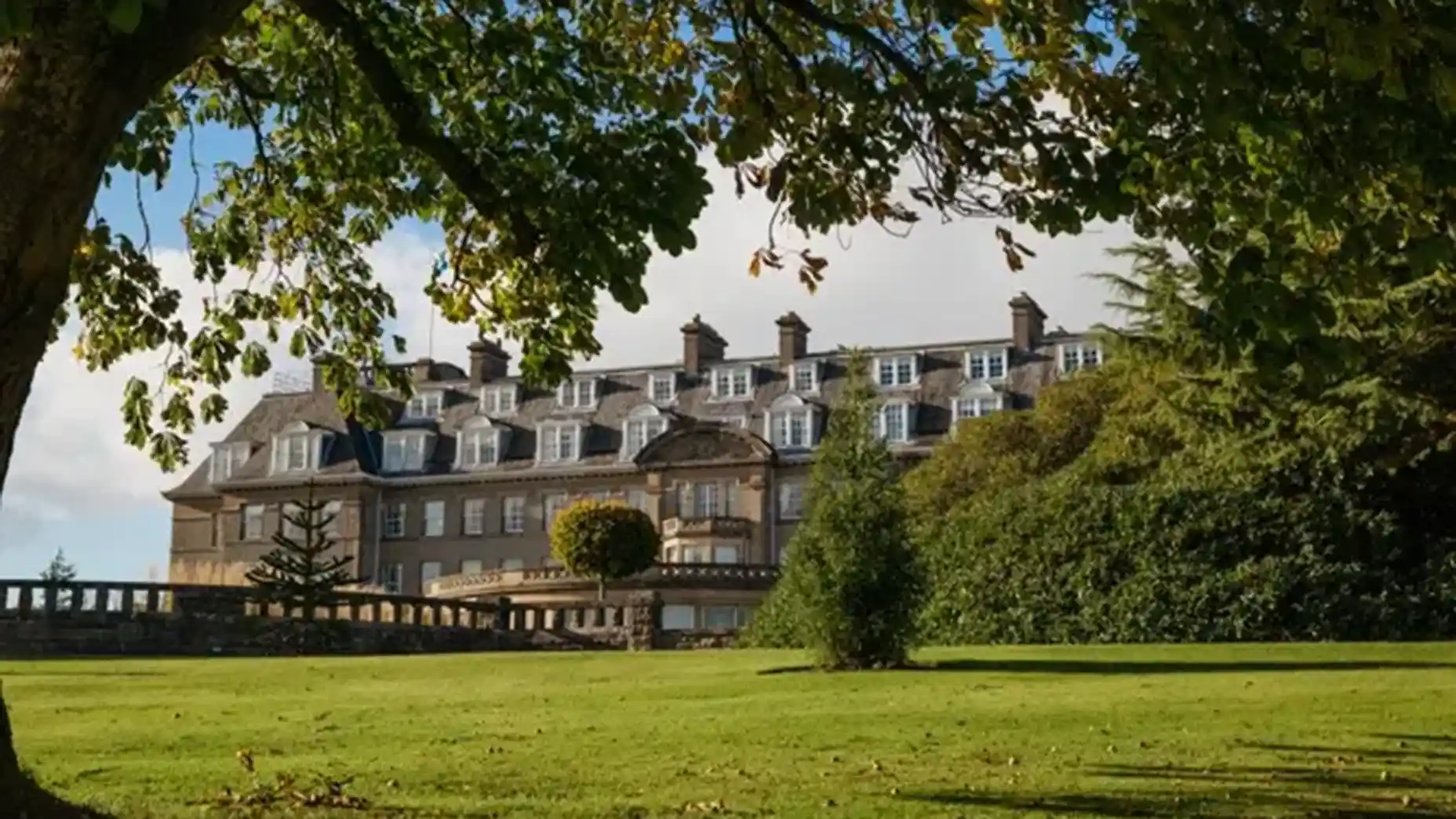
The property’s official name is gWest, but few people ever called it that.
To the public and the press, the 18-hole course in central Scotland, next door to famed Gleneagles, is more commonly known as “the ghost course,” a project that was finished but never fully opened.
Since its completion in 2009, it has existed in a state of suspended animation, a course in body but not in spirit, its holes intact, played by almost no one.
Now, though, it has entered a new phase of life.
Word came this week that the course and the 639-acre estate that surrounds it have been acquired by Gleneagles, the storied resort already home to two celebrated James Braid-designed courses, the King’s and the Queen’s, and the Centennial Course, which hosted the 2014 Ryder Cup and the 2019 Solheim Cup.
The purchase makes obvious geographic sense. It also marks an ironic twist, as gWest was originally conceived to compete with Gleneagles.
Gleneagles did not immediately respond to a request for comment, but in a prepared statement to The Courier earlier this week, a resort representative said the acquisition “offers an opportunity to extend our stewardship of this remarkable landscape.”
Google Maps
What’s in store for gWest remains to be seen. Gleneagles has not yet disclosed its plans for the course, whether and when it might open it to hotel guests, or if it intends to make any changes.
Among those following the story with particular interest is the man who designed the so-called ghost course, Scottish-born architect David McLay Kidd.
McLay Kidd was in his 30s but already renowned in golf circles for his work at Bandon Dunes when he was hired for the gWest project. At the time, he described the property as “the best inland site I have ever seen for a golf course.” Then he went quiet and never said another word about it.
That was out of character. McLay Kidd is one of the game’s more enthusiastic ambassadors for his own work, happy to discuss his designs and the landscapes they occupy. Developers who hire him know they can count on him to help promote a project. In the case of gWest, though, he had a falling out with his client, the family of Mahdi al Tajir, one of the wealthiest men in Scotland, over what McLay Kidd says were unpaid fees.
Kidd sued, but says he lacked the resources for a protracted legal battle against a client with such deep pockets. A settlement was reached, allowing him to pay his subcontractors, though he says he was never made whole for his own fees.
“So I pretty much went off and licked my wounds,” McLay Kidd told GOLF.com this week.
“I resolved that I would do everything in my power to ensure that the course got as little attention as possible,” he said. “Reporters would call to ask me about it, and I’d say, ‘I’m happy to talk to you about any of my courses, except that one.’”
Over time, he took to claiming credit, half-jokingly, for gWest’s failure to launch.
McLay Kidd was in Bend, Ore., his adoptive home, when he heard that gWest had been sold. It was welcome news.
“I couldn’t be more thrilled that Gleneagles have bought it,” McLay Kidd said.
His connections to Gleneagles, after all, run deep. McLay Kidd’s father, Jimmy Kidd, spent 25 years at the resort as the head superintendent, tending not only to its courses but also to its gardens and grounds. McLay Kidd, for his part, spent large portions of his childhood at Gleneagles before going on to work for the hotel’s then-owner, Adagio, when Adagio was looking to expand its golf holdings around the world.
Now that Gleneagles has acquired gWest, McLay Kidd is more than happy to discuss the course again. What he said 20 years ago still holds true. The site, he said, is stunning, spread across the same glaciated terrain that gives the King’s and Queen’s courses much of their appeal.
“It’s like Sand Hills in Scotland,” he said.
Should Gleneagles decide to carry out additional work on the course, McLay Kidd said he’d welcome the opportunity to contribute. But whatever happens, he’s pleased the way the story has unfolded.
“It has pretty much come full circle, reestablishing my family’s connection to the area,” McLay Kidd said. “I love the thought of the course being revived and becoming everything I’ve always believed it could be. But more than anything, it’s about my father, knowing that through this connection, his legacy at Gleneagles continues to burn bright.”