

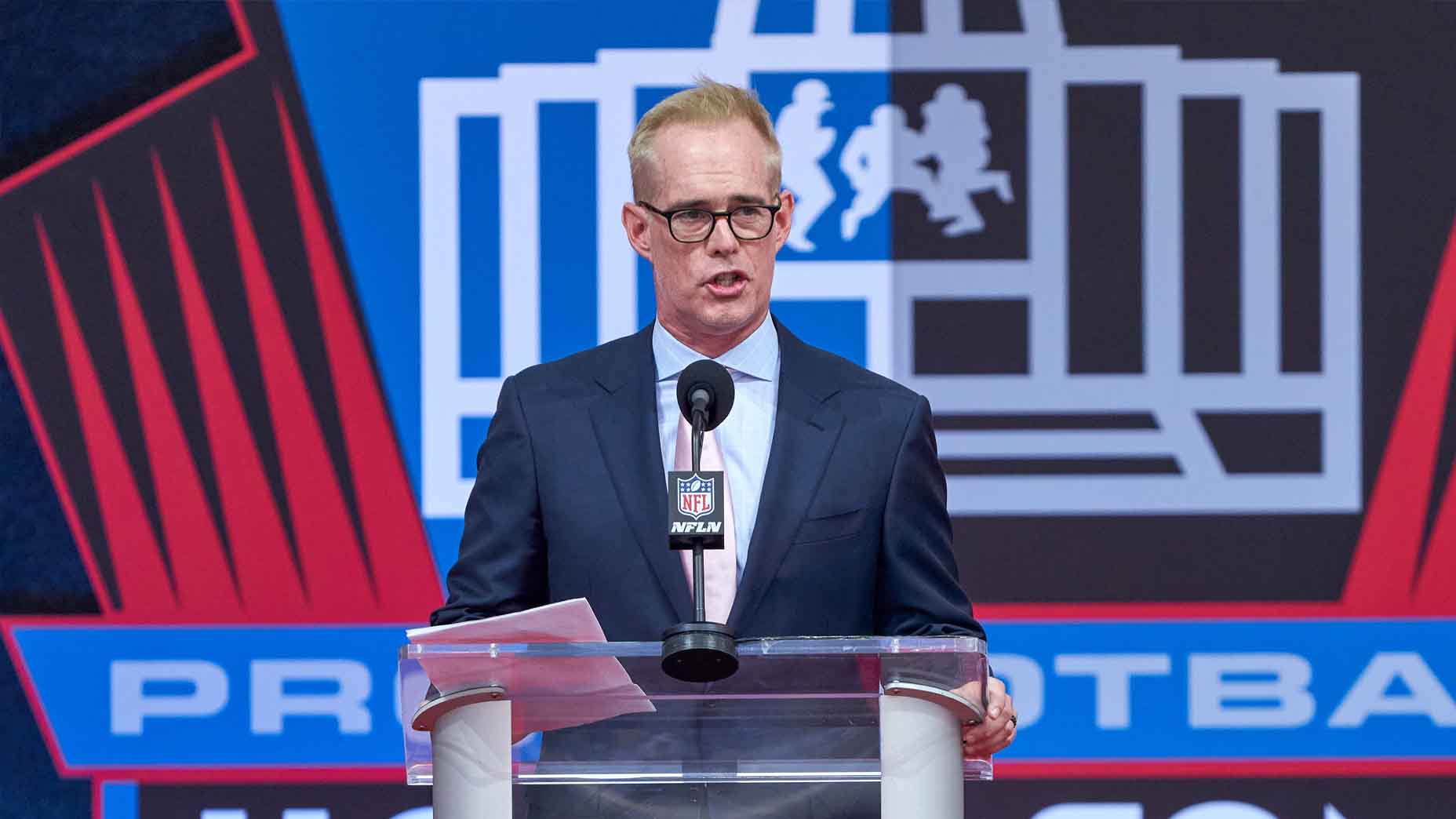
Joe Money has actually gotten in touch with 6 Super Disheses as well as 23 Globe Collection. He’s a member of the Athletics Televison Broadcasting Venue of Popularity as well as has actually obtained the Ford C. Frick Honor coming from the National Baseball Venue of Popularity as well as the Pete Rozelle Radio-Television Honor coming from the Pro Soccer Venue of Popularity. Money has actually been actually the vocal of a number of United States sporting activities’ greatest minutes over recent many years. He has actually experienced several problems along the road, yet he said to GOLF’s Subpar Podcast that absolutely nothing matches up to the problem of getting in touch with expert golf.
Buck worked for FOX when the network acquired the rights to the U.S. Open and started broadcasting the major championship in 2015. Starting that year at Chambers Bay, he discovered that calling professional golf, especially if you’re only doing it once or twice a year, is a different beast than calling the NFL or MLB on a weekly basis.
“Easily the most challenging thing for me to do,” Money told Subpar co-hosts Drew Stoltz and Colt Knost. “I remember when FOX got the rights and Johnny Miller was pissed off and everybody at NBC was mad. I was like indignant, like, ‘How could they be mad its system to network?’And Johnny Miller was like, ‘You don’t just fall out of a tree and do a U.S. Open.’ It upset me. I was like, ‘Well, we’re going to do great.’ He was right. He was dead right.
Shady Rays Golf Collection
Engineered for golfers. Performance eyewear here to elevate your game.
“It’s hard to pick up the PGA Tour and do our national championship having not done anything else to that point and trying to act like you’ve been there every other week,” Buck continued. “It’s like when I do baseball. I just did a Dodgers-Mets game. I haven’t done a game in a year. It’s hard when you’re not there on a day-by-day basis, and you haven’t kind of walked through the recent history and been there and been attentive to it and known who is hot coming in and you don’t have to research that stuff.”
For Buck, the most difficult thing was that he wasn’t seeing what he was calling with his own eyes. He had to rely on what he saw through monitors and heard through his earpiece.
“Then you add to that the layer of, I’m not looking at any of this with my own eyes,” Buck said. “I’m sitting with my back to the course. I love that game. That doesn’t mean anything. That doesn’t make me any more qualified to do it than anyone else, and I’m not watching it with my own eyes.
“I’m looking forward at cameras and at monitors, and I’m going off information I’m getting out of my ear or from the back of the studio. That’s a weird sensation for me. I usually have the best seat in the house; it’s generated out of my mind for better or worse, I’ve seen it with my own eyes, I can put my own thoughts to it, and now I’m just going off the information [I’m getting through my earpiece].
“You’re trying to put all that together, maintain the scoreboard, trying to create a narrative of why certain players are ascending, why guys are falling apart, remembering the previous shot that happened. It was way more than I ever thought it would be.”
Buck felt that he and his FOX team got the hang of calling golf around Year 5, when they called Gary Woodland’s win at Pebble Beach. But FOX sold the legal rights back to NBC after that tournament, as well as Buck’s time getting in touch with the U.S. Open ended.
To hear more from Money, look into the entire episode on YouTube.