

Titleist knows that much better than a lot of.
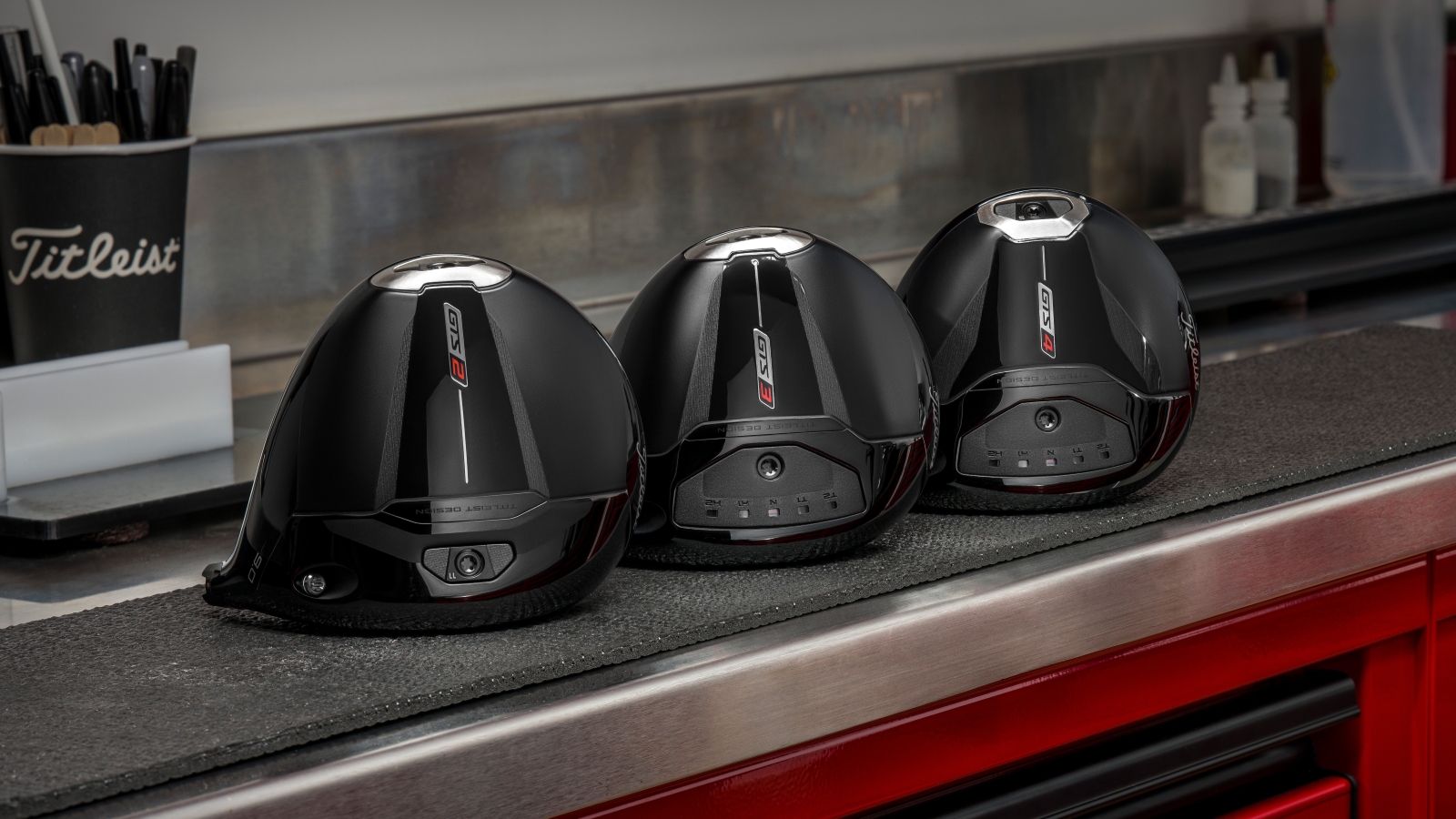
The provider’s brand new GTS motorist household is actually the most up to date phase in a tale that has actually produced Titleist the most-played motorist on the PGA Excursion for 7 successive times. The purpose was actually to take one thing currently shown and also create it much better.
The outcome is actually a motorist array that drives functionality ahead without giving up the qualities golf enthusiasts have actually related to anticipate and also adore coming from a Titleist metalwood.
At the center of the GTS tale is actually a brand-new Crack Mass Framework, blended along with a full-thermoform complex physical body. Around 60 per-cent of the motorist’s surface is actually created coming from a light-weight, exclusive matrix-polymer layer that represents only thirteen per-cent of the clubhead’s mass. Through minimizing the physical body’s body weight, designers managed to rearrange about 27 grams somewhere else in the scalp.
That independence enabled all of them to accomplish one thing formerly unreachable.
“In the past, you might possess must choose, perform you wish a secure motorist or even perform you wish a motorist that possesses tons of rate?” Titleist Golf Nightclub Manager (ANZ), Genetics Saunders, informs GA.
Titleist fitter John Grain reveals Digital Publisher Callum Mountain the ropes at Woburn. PICTURE: Titleist.
“This crack mass structure listed here provides our company the capacity to supply each of those factors.
“Our experts’re able to place a great deal of body weight ahead and also a great deal of body weight reduced. Onward provides our company our rate. Reduced provides our company our launch and also our reduced twist, as well as likewise assists our company optimize that rate through setting up CG in a truly excellent location.
“However at that point, possessing that body weight at the spine, that divided mass structure, permits our company to at that point take a great deal of reliability and also congruity to the item also.”
As Elderly R&D Supervisor Stephanie Luttrell reveals, “our company’ve never before been able to hit these CG positions and inertia properties at the same time, and we’re achieving that because of GTS’ construction.”
For golfers, the translation is simple: faster ball speeds, easier launch, and more forgiveness, all in the same driver.
The Tour response was immediate.
More than 50 PGA Tour players put a GTS model in play shortly after launch, including major names such as Justin Thomas and Jordan Spieth. Which is significant because Tour professionals are notoriously difficult to convince, especially when something is working.
The Speed Sync face has also evolved.
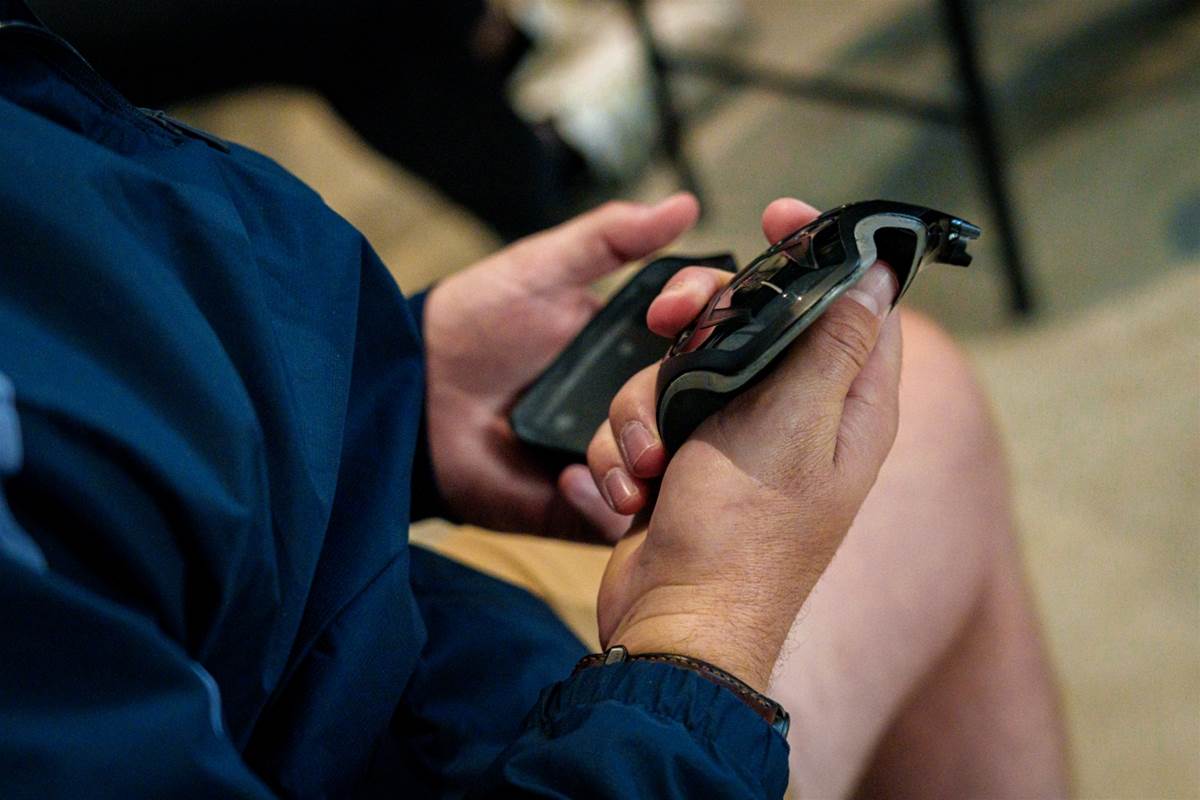
The attention to detail in the technology is second to none. PHOTO: Titleist.
A reinforced perimeter structure helps maximise ball speed from centred strikes, while changes to the upper section of the face improve performance on impacts higher on the face. Those strikes, common among golfers of every skill level, now retain more speed than previous generations.
The company has also introduced dual-weight adjustability across the entire family for the first time.
The GTS2 features interchangeable front and rear weights, while the GTS3 and GTS4 combine a rear weight with an adjustable front track. The added flexibility gives fitters another lever to pull when chasing launch, spin and shot shape.
Titleist describes the centre of gravity position as “a fitting tool”, and the new weighting system reinforces that philosophy.
The final touch might be the simplest.
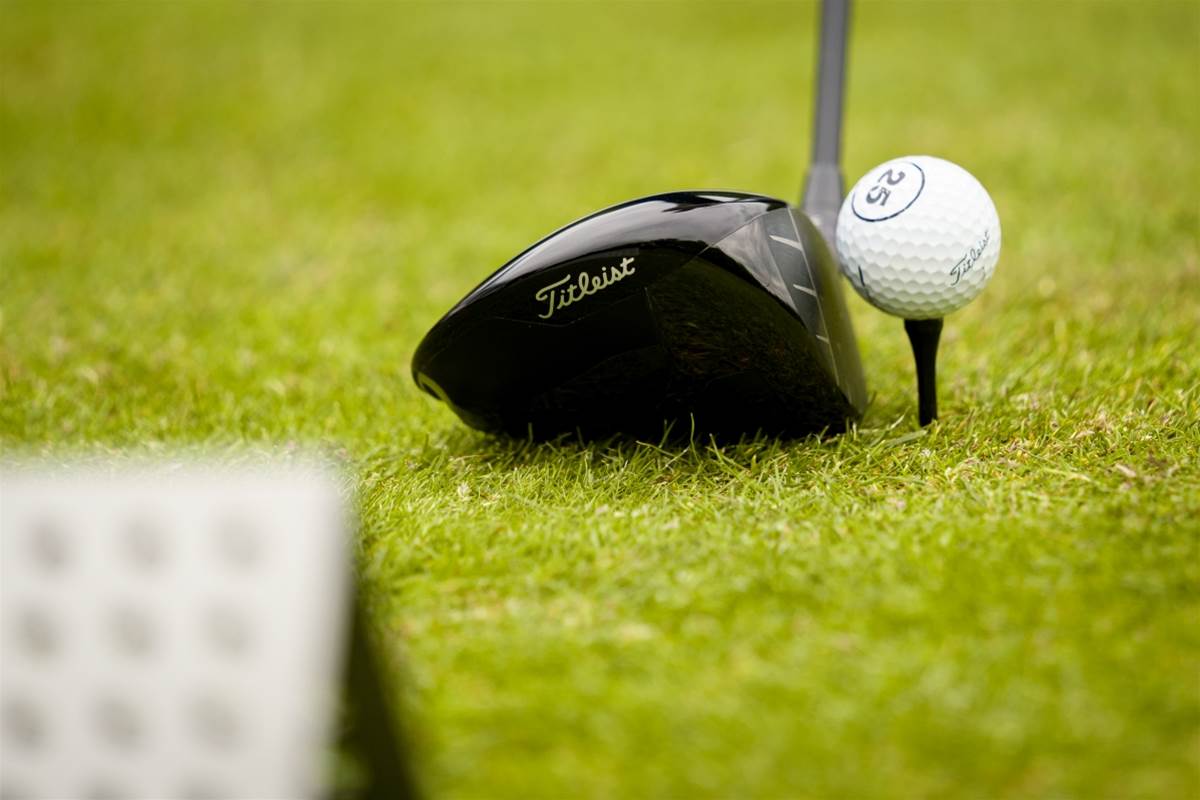
High-contrast graphics on the crown and face help frame the golf ball at address and make the centre of the face easier to identify. Tour players reportedly noticed the difference immediately, proving that confidence at address can be just as valuable as technology hidden beneath the paint.
Importantly, none have been achieved at the expense of another.
The GTS family covers a broad range of golfers, with each model having a clear purpose.
The GTS2 is the speed-and-stability option. It launches highest, offers the greatest forgiveness and is expected to be the volume seller. Golfers looking for effortless launch and confidence across the face will naturally gravitate toward it.
The GTS3 occupies the middle ground. Slightly more compact with a deeper face and adjustable track weighting, it offers lower launch and spin characteristics while maintaining plenty of forgiveness. For many better players, it represents the classic Titleist driver shape.
Then there’s the GTS4.
Built for golfers who generate excessive spin, it delivers the lowest-spinning flight in the family while maintaining more forgiveness than previous generations of Titleist’s low-spin offering. The larger profile ensures the pursuit of spin reduction doesn’t come with a significant penalty elsewhere.
Interestingly, Titleist fitters report plenty of crossover between models.
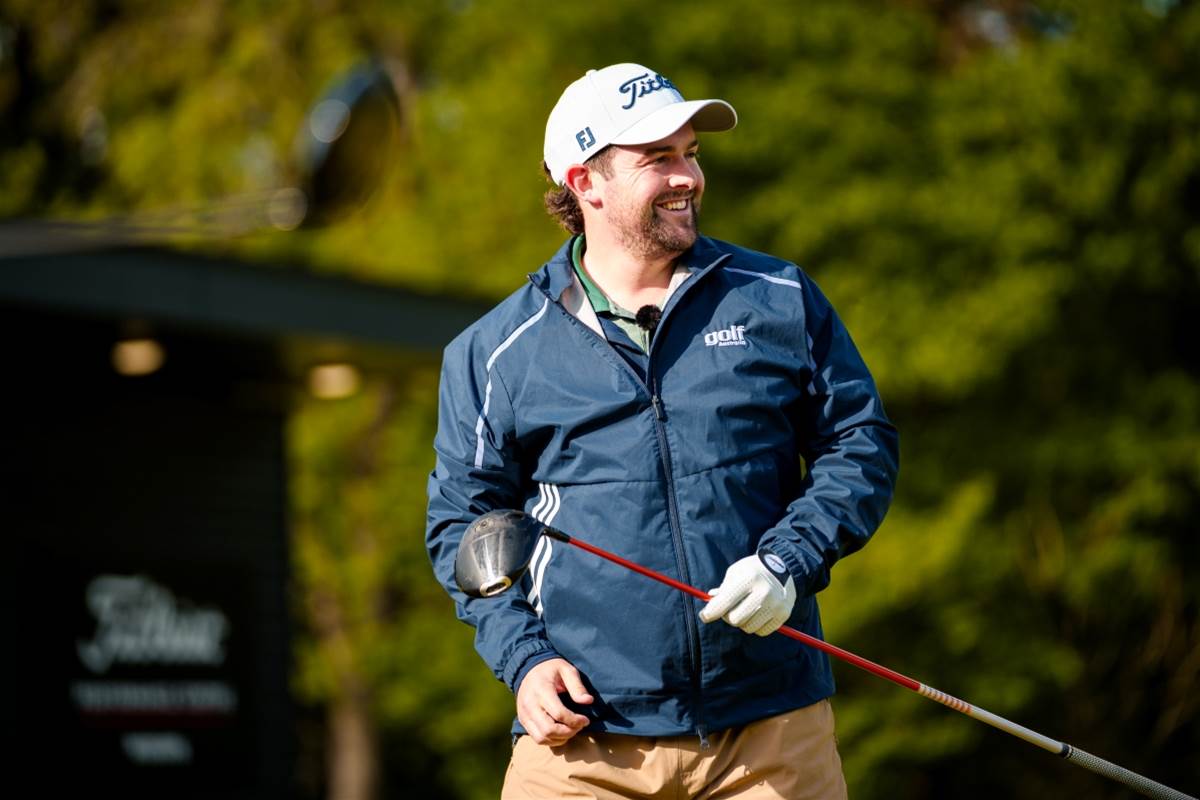
The importance of getting fitted cannot be ignored. PHOTO: Titleist.
Players who arrive expecting to fit into a GTS3 often discover the GTS2 produces better numbers, while others find the additional adjustability allows them to fine-tune a head shape they already prefer.
FITTING MATTERS
The most consistent message throughout our time with Titleist wasn’t about technology.
It was about fitting.
Titleist’s philosophy remains unchanged. Find the right head first, then build around it.
According to Titleist’s Golf Club Fitting Manager, Jon Law, the process starts with selecting the correct head model, loft, shaft length and centre of gravity position before moving on to shaft type and finer adjustments.
“The process to get to the right outcome and the best outcome for a player hasn’t changed,” Explains Law.
“We have actually just got a lot more tools in our toolbox to be able to optimise that ball flight for that player. So, we’re always looking at what the ball is telling us and how we can make that improve.
“That process doesn’t change. The TrackMan data that we look at is still the same. We’re really looking at ball speed, launch, spin for creating the best land angle for the ball so that, particularly with a driver and a distance fairway club like a 3-wood or a mini [driver], we can maximise carry and total distance” he adds.
The launch monitor numbers still drive the decision-making process, but GTS gives fitters more ways to chase the ideal outcome.
Titleist repeatedly describes the centre of gravity position as a fitting tool, and GTS provides more opportunities than ever to use it effectively.
For golfers, that’s where the biggest gains are likely to be found, not in the driver itself, but in finding the correct version of it.
“We’ve just got a lot more tools to be able to optimise that now. The dual weighting really is an absolute game changer,” Law adds.
“We can keep a player in maybe the model that they prefer the look of, but because we can then move mass around, we can give them the flight that they need.”
GETTING FITTED AT WOBURN
There are fitting centres, and then there is the Titleist Performance Centre at Woburn.
Set amongst typical English countryside, about an hour north of London, the Titleist Performance Centre is a glimpse behind the curtain; the attention to detail is extraordinary.
It was immediately clear why so many of the game’s best players pass through these doors.
On the range, getting into their work were two familiar faces from home. Former New Zealand Open champion Ryan Peake and 2023 PGA Tour of Australasia Order of Merit winner, Kazuma Kobori, were working with the Titleist team to get their bag setups and games sorted ahead of a busy stretch through Europe.
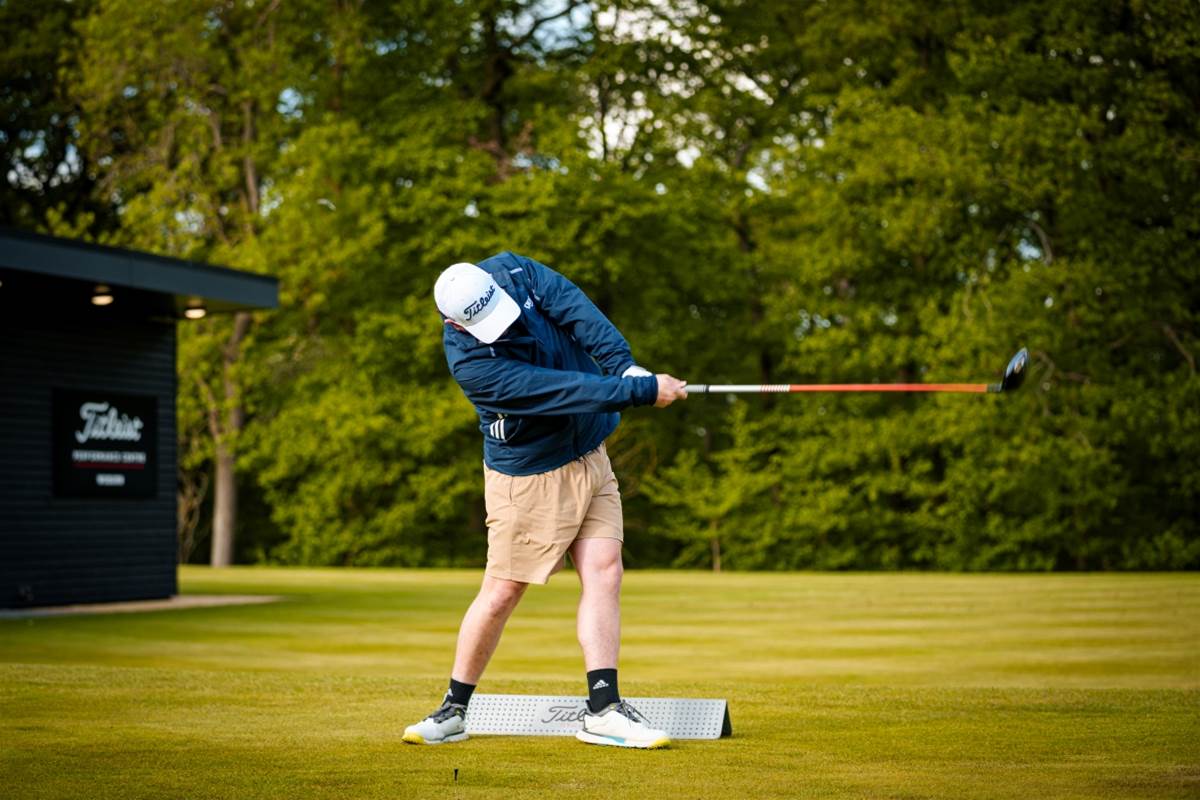
GA gets the full Titleist fitting process. PHOTO: Titleist.
Their presence served as a reminder of what Woburn really is. A high-performance working environment where tour players gain access to the first-class expertise on display.
Golf Australia’s day started with a detailed presentation on the new GTS driver family. Thorough barely does it justice.
Titleist dissected every element of the design process, from the new thermoplastic polymer body construction through to the repositioning of mass throughout the head. The technology is fascinating, but what stood out was every design decision seemed to begin with a question.
How does this help golfers hit better and more consistent shots?
This approach explains why Titleist remains the most-played driver on professional tours worldwide. The company has made incremental gains, validated by performance, which remains the formula.

The GTS family itself reflects that thinking.
Like plenty of golfers, I arrived with assumptions about what would suit my game. I naturally gravitated towards the GTS3. It looked right. It sat beautifully behind the ball. In my mind, the decision had practically been made previously the first shot.
The numbers had other thoughts.
My tendency has always been the same. A lower flight, occasional left miss. Some longstanding driver scar tissue accumulated over years of watching tee shots disappear into places golf balls have no business visiting.
Within a handful of swings, my fitter, John Bean, had identified exactly what was happening.
More importantly, he knew how to combat it.
What followed was a fascinating reminder of why proper fitting matters more now than ever. It wasn’t a case of being turned into a generational driver of the ball in 15 minutes, but a few simple alignment pointers and also subtle head-weight shifts tightened dispersion almost immediately. From there, the small stuff started to matter. Tiny changes in loft, slight adjustments to head weighting, and also different shaft profiles. Each tweak produced measurable changes in launch, spin and dispersion.
Some gained distance, others tightened misses. A few somehow managed both.
By the end of the session, I found myself fitted with a GTS2 with 11 degrees of loft and a Graphite Design Tour AD DI shaft, which certainly produced the best results.
The biggest takeaway wasn’t the extra carry distance, although nobody complains about seeing a few more metres.
It was consistent; even my poorer swings and strikes stayed in play.
As somebody whose relationship with the driver has occasionally resembled a hostage negotiation, that felt significant.
The fitting philosophy itself is refreshingly straightforward. Rather than chasing a single launch monitor number, the goal is to build a driver that performs consistently across an entire round of golf.
Because decent drives only matter if you can repeat them as regularly as possible.
Which thankfully became more obvious as the session progressed. My best swings looked better. More importantly, my worst swings looked far less damaging.
And that is probably where amateur golfers stand to gain the most from modern fitting.
Not from finding the longest driver, but from finding the right driver.
The technology inside GTS is impressive. The tour adoption will undoubtedly continue to grow. But after a day at Woburn, the real story was the process.
One aspect that stood out throughout the experience was the consistency of the process. Having now been fitted by Titleist in three different countries, the accents may differ, but very little else does.
The same attention to detail, the same evidence-based approach and the same commitment to finding the right equipment rather than selling a predetermined outcome have been evident each time.
Titleist has invested heavily in a global network of fitters who continually develop their skills and work to a shared philosophy. The outcome is a fitting experience that feels remarkably consistent whether you are actually at Woburn, Spring Valley in Melbourne, The Country Club in Japan, or whenever specialist Titleist fitters come to your local club or city.
It’s an approach that mirrors the company’s standing in the professional game. Titleist has been the most-played motorist on the PGA Excursion for seven consecutive seasons, a statistic that speaks not only to trust in the product but also to confidence in the process that puts it into gamers’ hands.
To obtain all yours, browse through: https://www.titleist.com.au/golf-clubs/golf-drivers
© Golf Australia. All legal rights scheduled.