

50 Words or Less
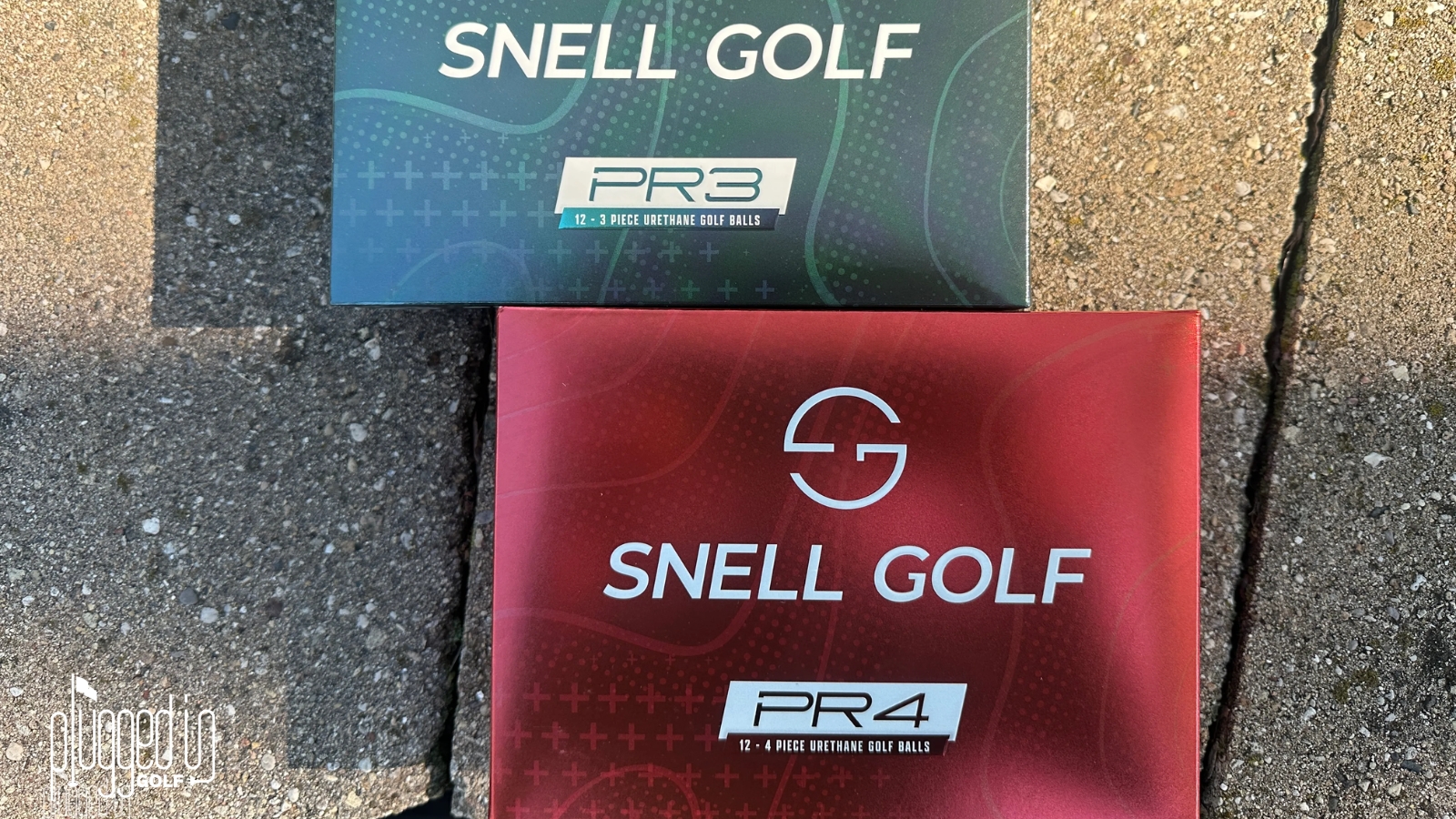
The Snell PR3 golf ball is one of the best DTC golf balls available. Great price and strong all-around performance. The Snell PR4 golf ball is an equally good value, but it’s best for very fast or skilled ball strikers.
Introduction
Golfers with even a passing interest in equipment know that there are countless direct to consumer golf ball brands. It’s not hard to see why: with the Titleist Pro V1 currently retailing for $57.99 per dozen, many golfers need a less expensive option. But how do you know which brand to trust?
You might pick the one headed by, and named for, the guy with 25 years of experience designing the aforementioned Pro V1 and numerous models for TaylorMade, Dean Snell. The new Snell Golf PR3 and PR4 golf balls aim to give golfers the Tour-style performance they crave at a fraction of the price of the big names. I tested both to see if they deliver.
Feel
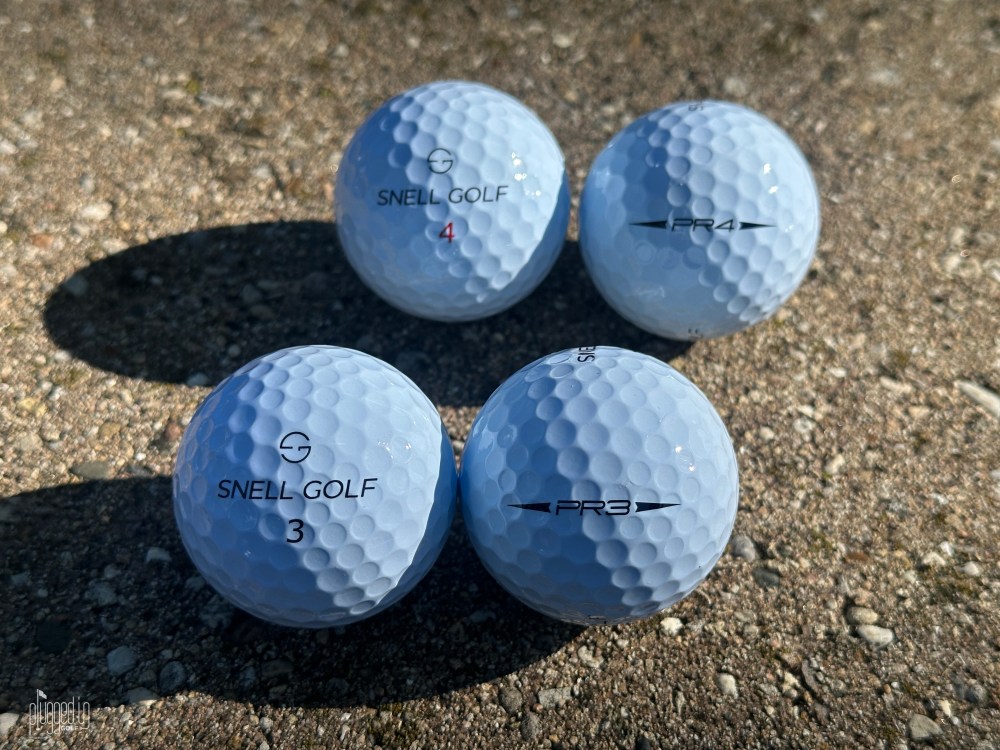
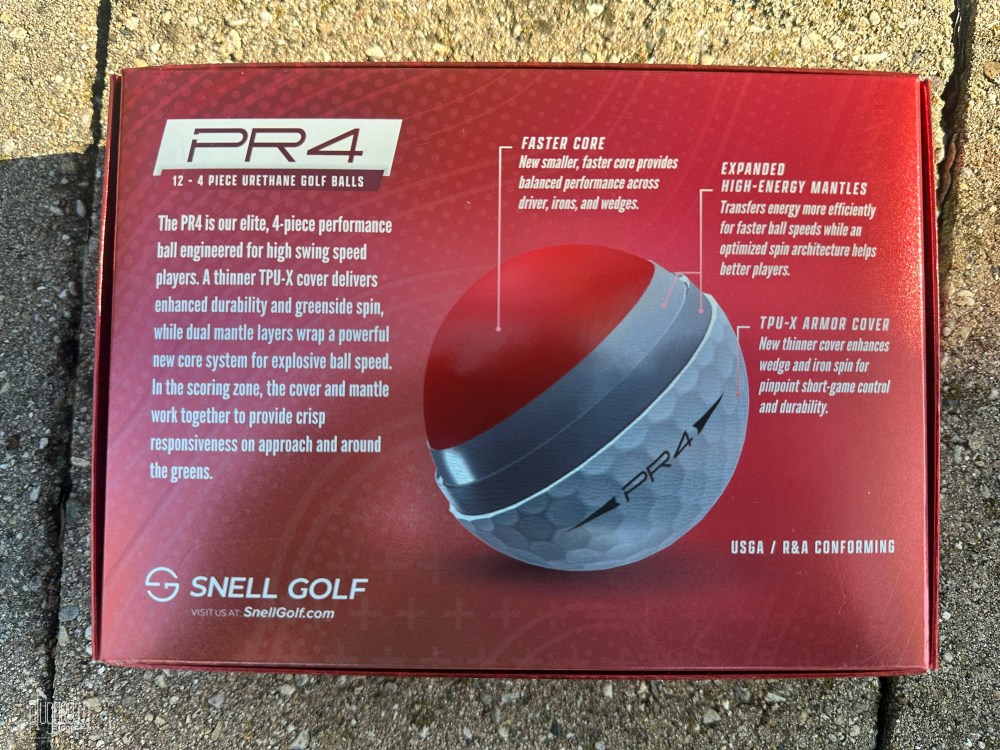
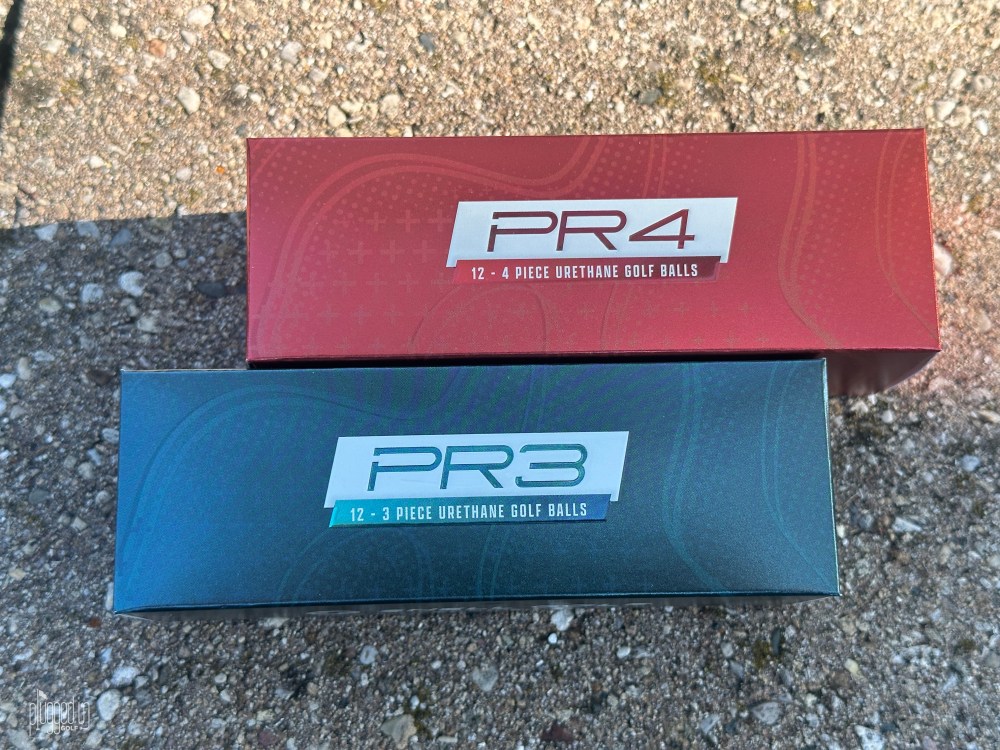
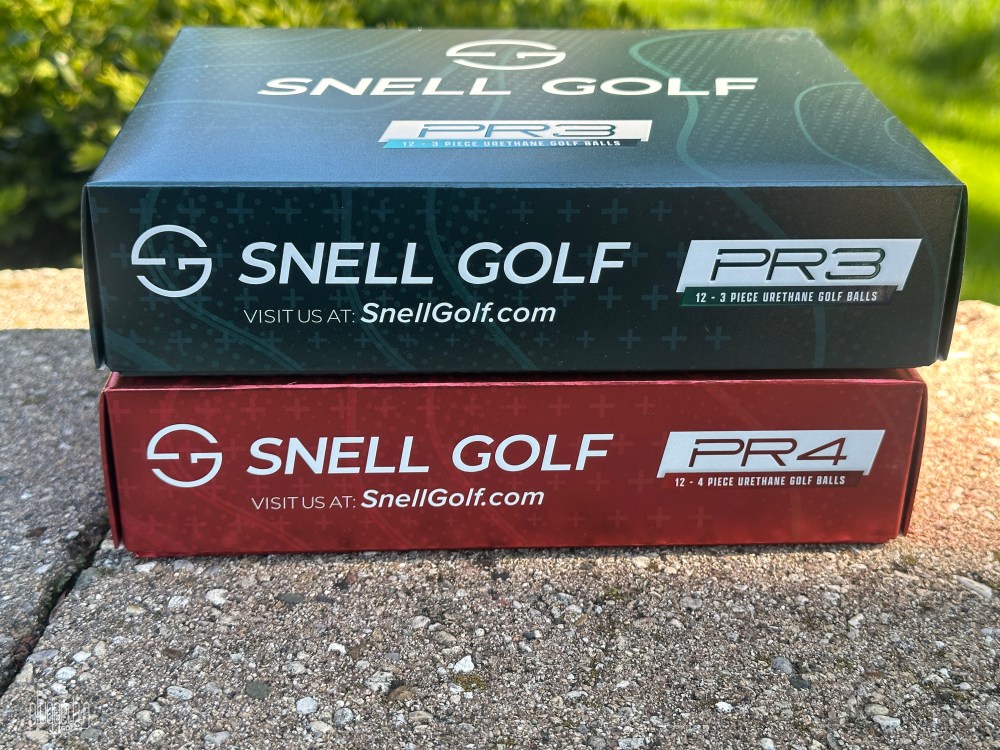
Both the Snell PR3 and Snell PR4 golf balls feature a urethane cover, specifically a “TPU-X Armor” cover that’s designed to be thinner but also more durable. Urethane covers are known for delivering softer feel on and around the green as well as more short game spin. Per Snell, the PR3 has “soft urethane feel for better feedback on every shot” while the PR4 has “firmer feel and faster ball speeds.”
Starting on the green, I found that the Snell PR3 and PR4 both feel great – and very similar – on putts up to ten feet. They have the soft feel and responsive-but-not-harsh sound that’s very similar to a Pro V1. At 25 to 30 feet, the two balls start to show their own personality a bit more. The Snell PR3 has a softer, more compressed feel and a quiet, responsive “click.” The Snell PR4 is clearly firmer and louder. It’s not a hard ball, but it’s easily distinguished from the PR3.
Interestingly, I found that the Snell PR3 had a more pronounced impact sound with the wedges and irons. To my ear, the Snell PR4 was a bit duller and quieter. Again, both are well within the normal range for a Tour-style ball, but there’s a pretty clear difference when you’re testing them head to head. [See Price / Buy]
Short Game
As is often the case, both of the new Snell golf balls are billed as having high wedge spin. In my testing, I found that they were both within the standard range for Tour balls but on the lower end. This was particularly noticeable on partial wedge shots. On shots from short pitches to half wedges, both the Snell PR3 and PR4 were several hundred RPM below average. On full wedge shots, they were below average by only a couple hundred RPM.
While higher spin is not objectively better, what is better for all golfers is consistency. Both Snell golf balls were impressive in that regard, keeping their spin consistent across large test samples. Comparing them to each other, the Snell PR3 had slightly higher peak spin than the PR4, but I think the difference would be hard to see on the course.
Long Game
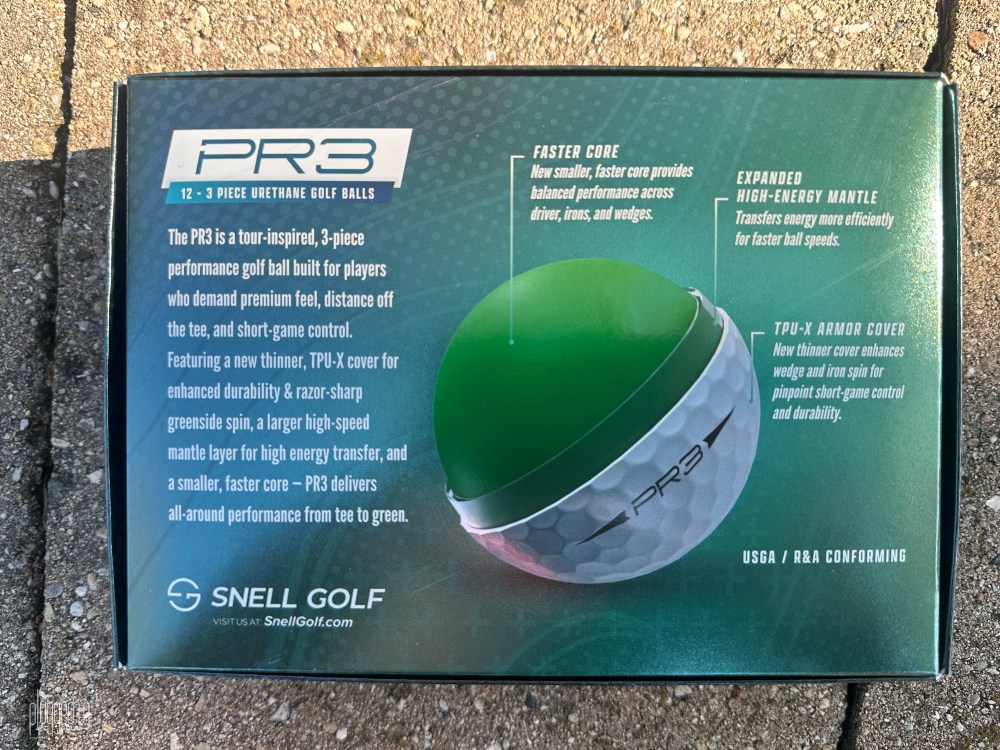
Snell bills the PR3 as being good for a “wide range of players” and the PR4 as targeting “higher swing speeds.” This comes from the combination of speed and spin that each one produces.
In my testing, I found that the Snell PR3 produced iron spin just a couple hundred RPM below average. The PR4 was a couple hundred RPM below the PR3, giving it a slightly more penetrating ball flight. As a low spin player, I saw better landing angles from the PR3 – I don’t have extra spin to spare. High spin players may see meaningful distance gains from the PR4. Both the PR3 and PR4 produced very good ball speed.
When I got to the longest clubs, the differences between the PR3 and PR4 were most noticeable. Even as a low spin player, I was getting a couple hundred RPM more spin from the PR3. Where that 200 RPM isn’t meaningful in the context of a wedge shot, it’s very relevant with a driver or 3W. Again, the added spin is going to be good for some players, bad for others. Personally, I saw no loss in distance.
For me, the definitive difference was in ball speed. I was getting high, consistent ball speed from the Snell PR3. With the Snell PR4, I could get to or near the same peak ball speeds, but the consistency was not as good. My driver swing speed has been around 105 MPH lately, and that’s clearly not high enough for the Snell PR4 – at least not without better ball striking. If you’re going to play the PR4, you need to be very fast or fast with excellent contact.
Rimac Compression Data
A couple things stood out to me as I reviewed the compression data on these Snell golf balls. First, the consistency of the PR4 was impressive. All but five balls fell within Snell’s stated compression range of 85-90, and those were at 91 or 92. Also interesting was that the Snell PR3 tested higher than the PR4 despite being billed as lower compression (80-85, per Snell). While the specific numbers are not important – there is no industry standard, so Snell’s tests may simply report higher or lower numbers – it is relevant that, in this sample, the PR3 was higher compression than the PR4. [See Price / Buy]
Find more Rimac Compression Data in golf ball review archives HERE.
Snell Golf PR3 – 24 balls tested
Average Compression: 91.08
Median Compression: 91.5
Maximum Compression: 95
Minimum Compression: 84
Snell Golf PR4 – 24 balls tested
Average Compression: 88.96
Median Compression: 89
Maximum Compression: 85
Minimum Compression: 92
Conclusion
The Snell PR3 and PR4 golf balls deliver on their promise of “Tour-level performance without the premium price.” At a reasonably affordable $35/dozen, this is a really solid golf ball. You can get the price even lower – as much as $2/dozen – when buying three boxes or more at a time. If you’re not sure which Snell golf ball is right you, they offer test packs with multiple models and a simple ball fitting quiz HERE. [See Price / Buy]
Snell PR3 & PR4 Golf Balls | Premium Performance
PR3 and PR4 continue Snell Golf’s mission of delivering high-performance urethane golf balls without the inflated premium price. Built with improved materials and tighter manufacturing tolerances, both models are designed for more consistent performance from tee to green.
Help support our mission. We earn a commission if you make a purchase, at no additional cost to you.

Editor In Chief at Plugged In Golf
He founded Plugged In Golf in 2013 with the goal of helping all golfers play better and enjoy the game more.
Matt lives in the northwest suburbs of Chicago with his wife and two daughters.