



50 Words or Less
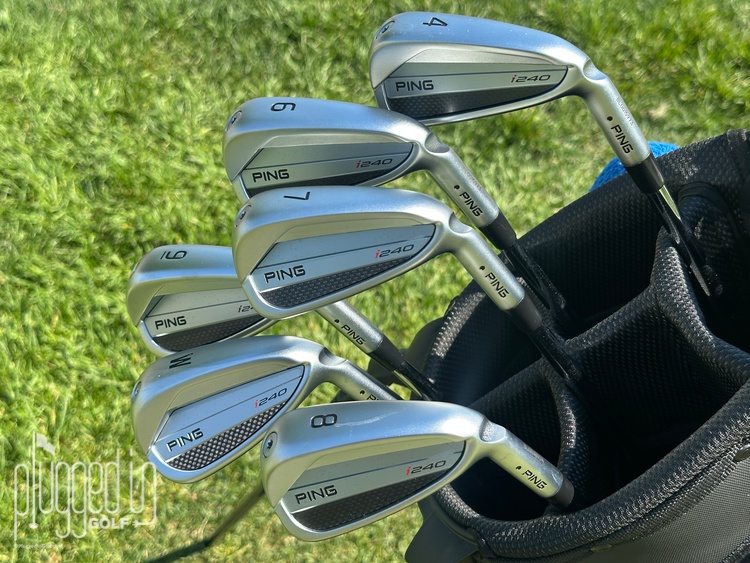
The PING i240 irons are extremely forgiving for their size. Tremendous consistency. Slightly above average launch and spin to promote softer landings on the green and more predictable ball flight. An ideal choice for golfers transitioning into players irons.
Introduction
Since their introduction almost three years ago, the PING i230 irons [review HERE] have been my easy answer to the question, “What is the most forgiving players iron?” This leads me to a question of my own, one I ask any time a product has to follow something amazing: “How is the next one going to be better?” For the new PING i240 irons, the answer is to fly even higher and, potentially, farther.
Looks
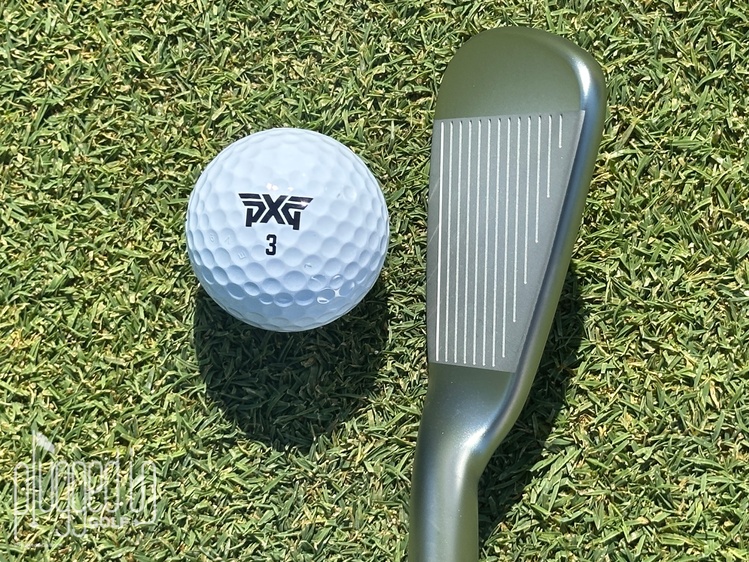
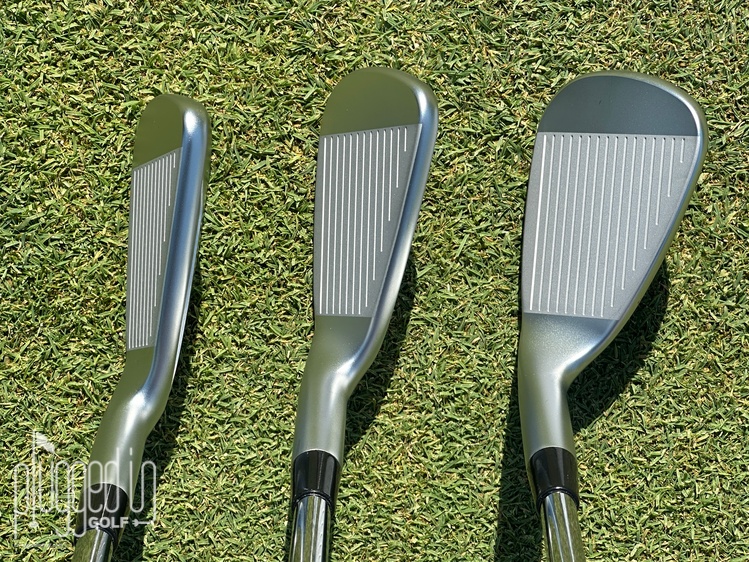
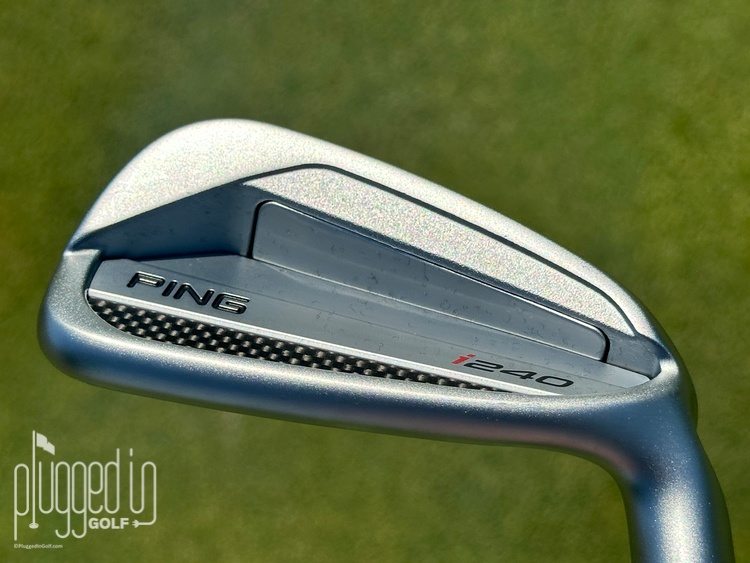
It’s hard for me to look at the PING i240 irons as anything other than the perfect transition set for the aspiring player. Visually, they sit in a nice middle ground between PING’s uber forgiving G440 and the Tour-style Blueprint models [Blueprint S review HERE, Blueprint T review HERE]. These irons have a shorter blade length, modest offset, and thin top lines. They’re not scary thin butterknives, but they give good and improving players the look they want in the address position.
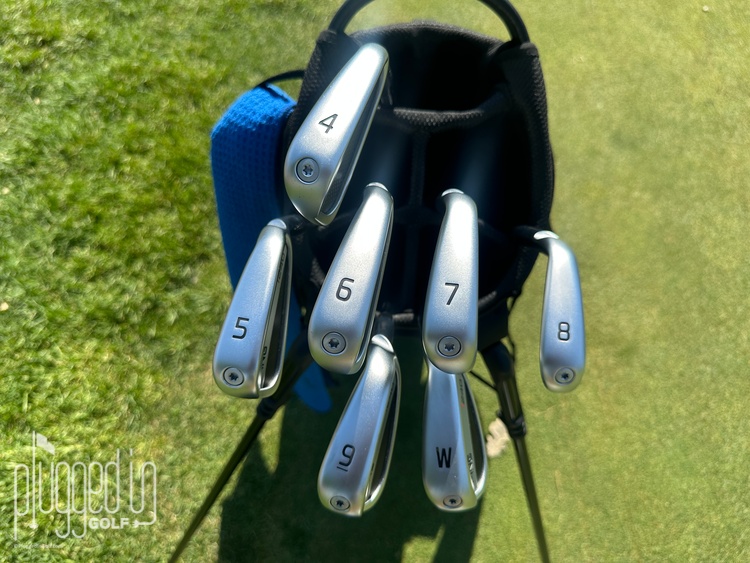
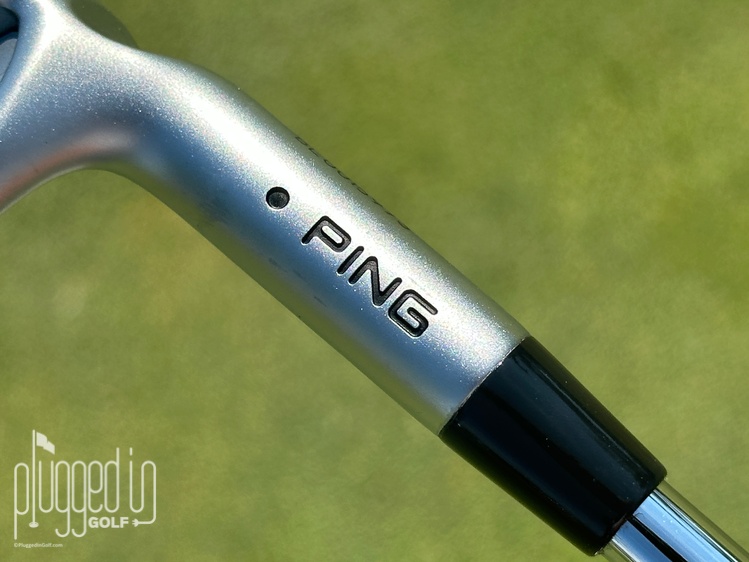
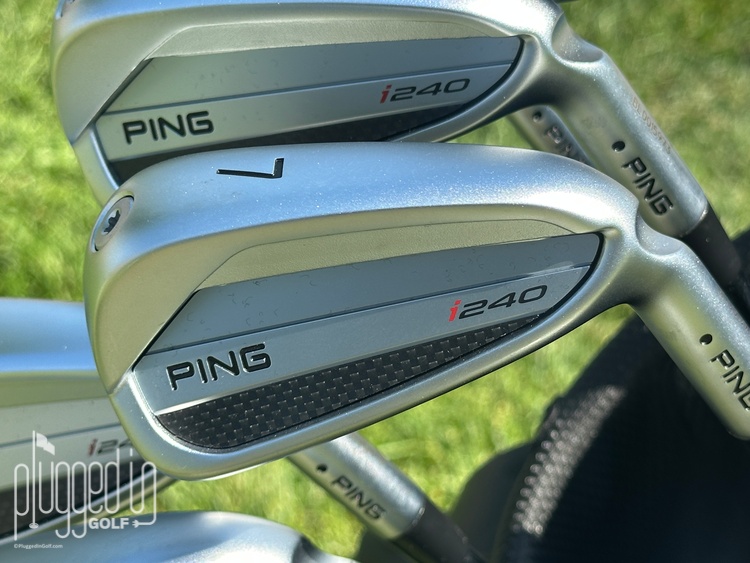
In the bag, the i240 irons are a little busier than the i230, but, in true PING fashion, it’s a look borne of function. The shaping is clean and classic – a traditional cavity back with a couple levels in the cavity. The branding is minimal, too. What stands out is the carbon fiber badge, the function of which I’ll discuss shortly.
Sound & Feel
My first note on the feel of the PING i240 irons was about how good the feedback is. Throughout the set, my hands told me exactly where the ball hit the face. What I like even more than the clarity of the feedback is that I got the message without any sting. Mishits don’t feel quite as soft as pure strikes, but they never get hard or clanky.
The sound does change depending on the quality of the strike, adding to the feedback. Quality strikes are quiet “thuds”. It’s not quite the buttery forged sound, but it’s not far from it. Mishits – particularly thin ones – add some “click” or “snap” to the mix. It’s not too loud or unpleasant, but it’s an added cue that you didn’t do your best.
Performance
The PING i240 irons were at a disadvantage going into this testing for two related reasons. Unlike the i230, they couldn’t sneak up on me, and the bar had been set extremely high. I found that these clubs were up for the challenge.
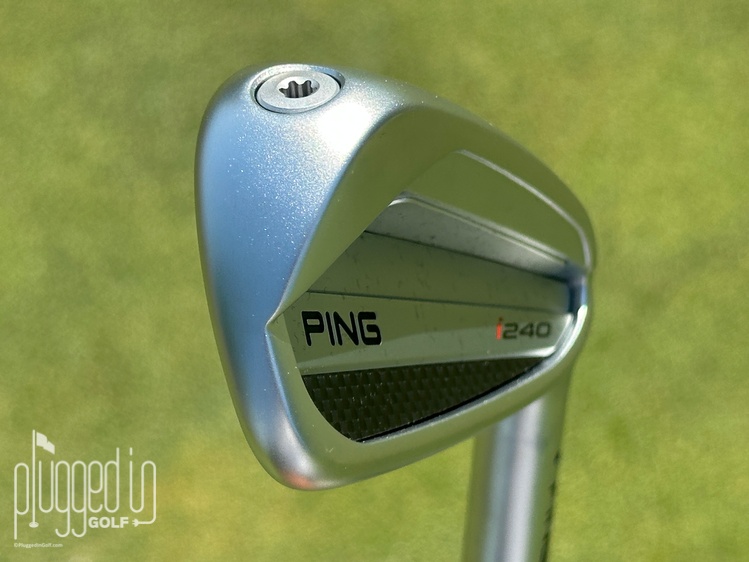
Like the i230, the PING i240 irons deliver consistency well beyond what you should expect in an iron of this size. From ball speed to distance to dispersion, this is likely the new most predictable players iron. If you need the entire kitchen sink of forgiveness, opt for the G440 irons [review HERE], but any golfer wanting to transition into a players iron can confidently do that with the i240.
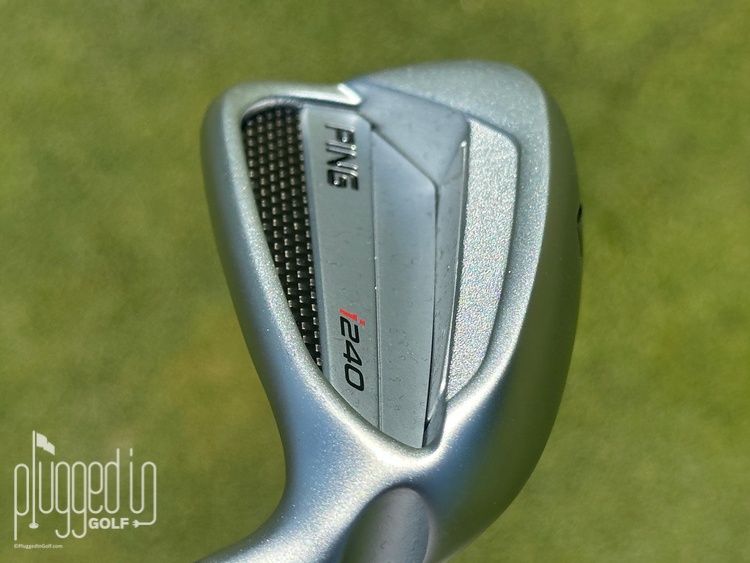
Despite being forgiving, the i240 irons still offer players ample shot control. The smaller profile and steady feel off the face gave me the confidence to attempt – and hit – fades and draws of all sizes. I could also flight the ball higher or lower without much trouble.
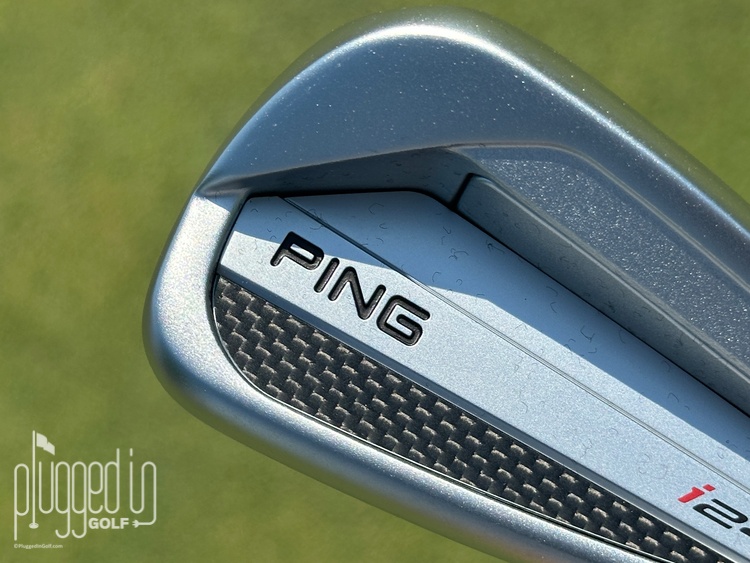
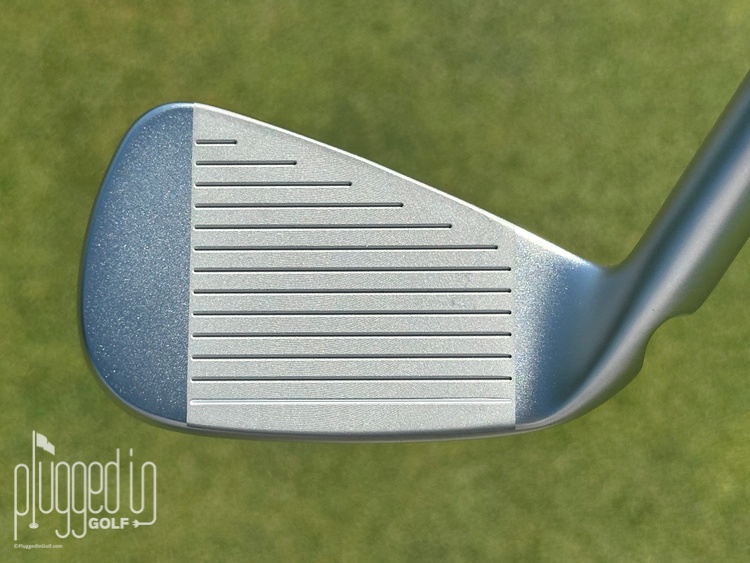
While the i240 irons can hit multiple trajectories, their stock shot is higher than average. This is PING’s major talking point with these irons: a lower CG promotes higher ball flight. The lower CG comes in part from the aforementioned cavity badge. These irons also spin a little more than average due to “fewer and wider grooves.” Higher launch and spin are meant to give skilled players more predictability with their iron shots and softer landings on the green – two things I saw clearly in my testing.
Designing a slightly higher launch, higher spinning iron in 2025 is exactly why PING is always the OEM that tests my journalistic objectivity (more plainly: I love what they do). This is them saying, “We’ve seen the data, we know what will help you play better golf, here it is.” They could have easily made another iron with stronger lofts, longer shafts, and lower spin to “win” more fittings, but they didn’t. This may not be the longest iron you hit in your next fitting, but I’d encourage you not to make carry distance the one number that overrides everything else.
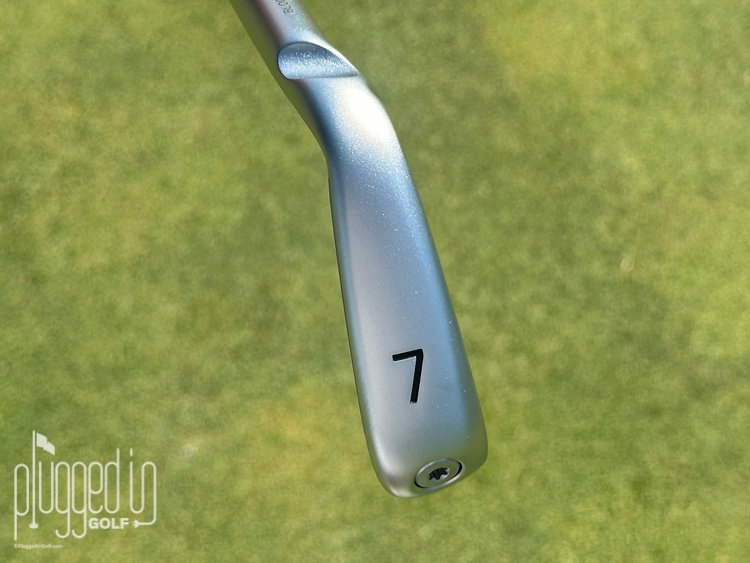
Something more subtle that I really enjoyed about the PING i240 irons is the sole. The sole isn’t wide – it’s comfortably within the bounds of a players iron – but it has a softened leading edge and ample bounce. For me, this combination of slightly higher bounce on a thinner sole is ideal. The club feels nimble, and I could easily bite into the turf, however there was ample protection against digging. When my swing got a little sloppy, I lost some yardage, but the club didn’t die in the dirt.
Conclusion
Some things change, some things stay the same. When people ask, “What’s the most forgiving players iron?” my answer will still be “PING”, it will just be the i240. Whether you’re a skilled ball striker looking to make the game a bit easier or an aspiring playing “moving up,” the new PING i240 irons will be a great choice for your next set.
Support Plugged In Golf, Shop HERE
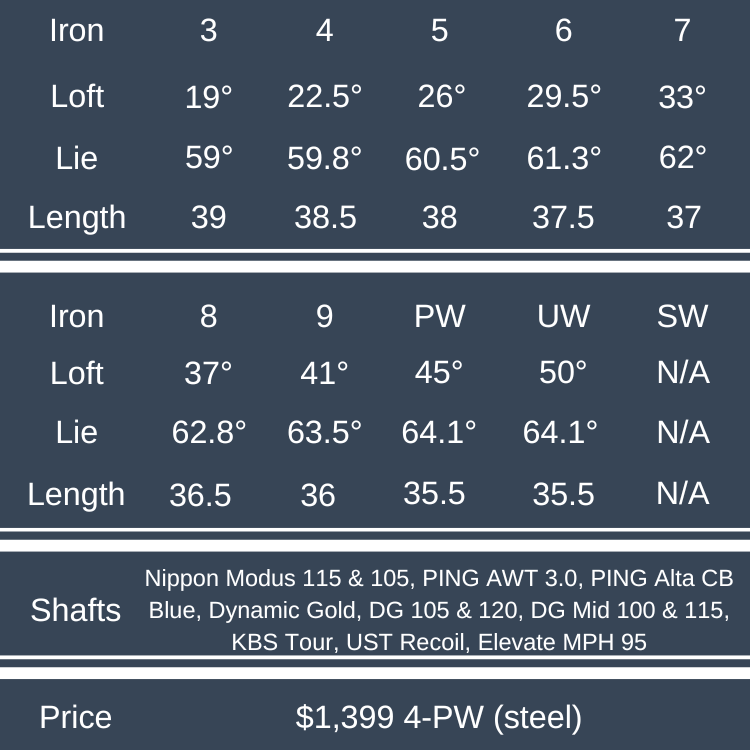
PING i240 Irons Price & Specs

Editor In Chief at Plugged In Golf
He founded Plugged In Golf in 2013 with the goal of helping all golfers play better and enjoy the game more.
Matt lives in the northwest suburbs of Chicago with his wife and two daughters.