

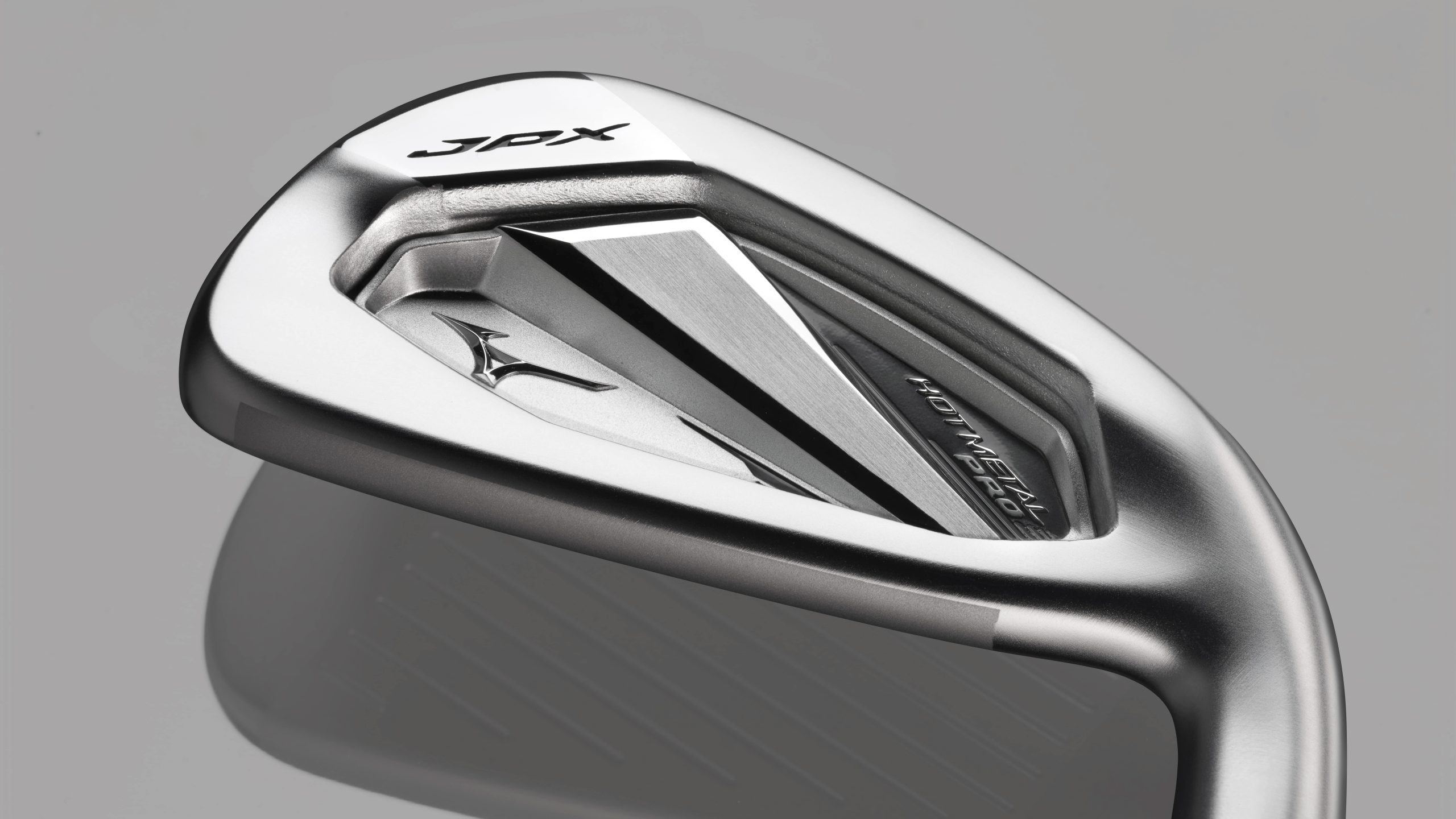
For golf players looking for irons along with a mixture of state-of-the-art innovation and also quality, the Mizuno JPX925 Hot Metal Pro Golf irons are actually properly worth taking into consideration. Furnished along with brand-new design focused on establishing your video game, these decision function in the palms of each skilled higher single-figure golf players and also those aiming to bring in significant remodelings in their video game.
Mizuno JPX925 Hot Steel Pro: Technology Breakdown
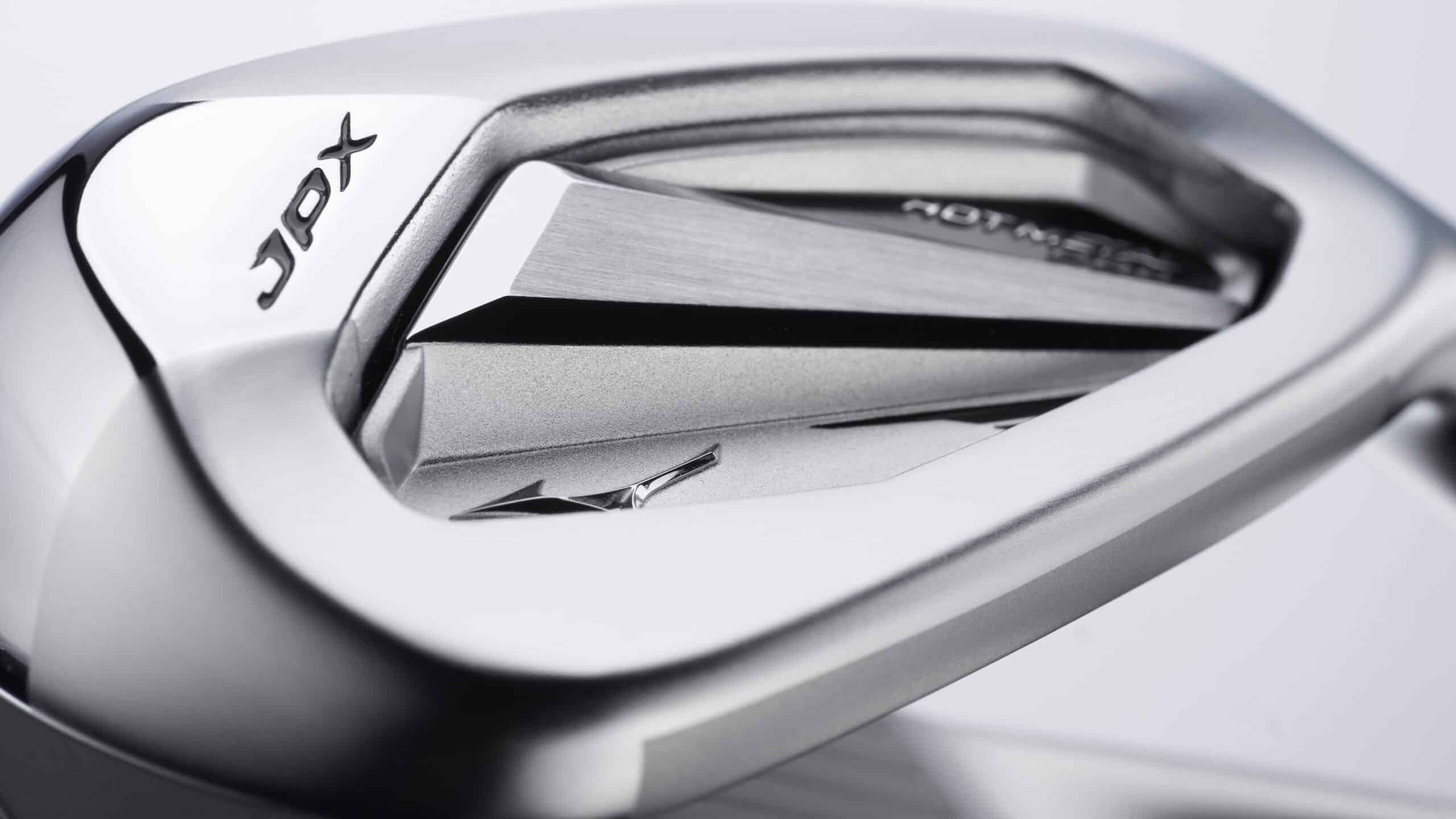
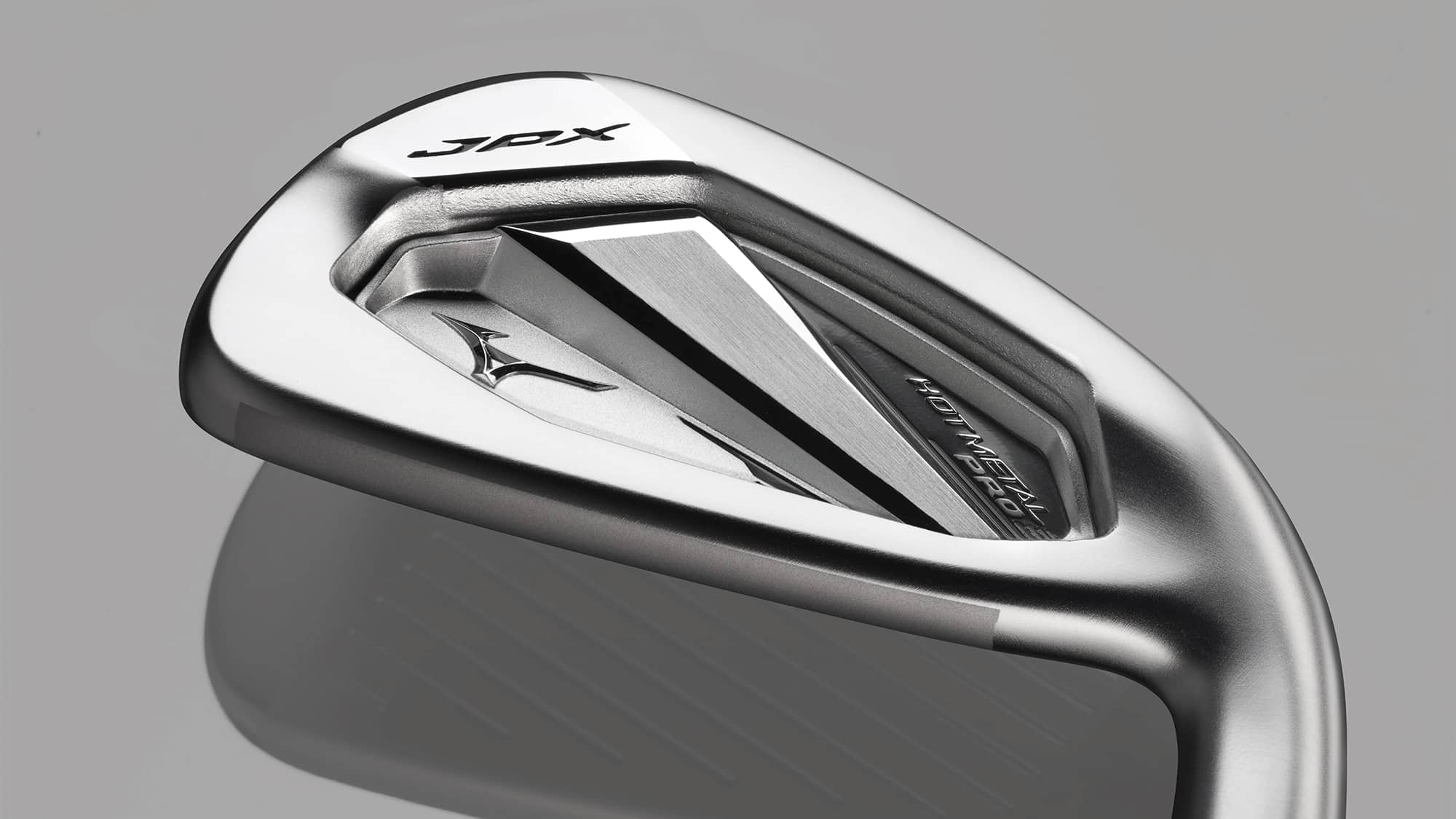
The JPX925 Hot Steel Pro Golf irons function a number of impressive innovations. Mizuno’s brand-new Contour Ellipse gives a re-engineered multi-thickness skin that is actually only 1.2mm bulky (12 pieces of newspaper) — a 30% renovation over the JPX923. The skin condition is actually tilted higher foot to reduced heel, accommodating popular mishit designs and also assisting to sustain round rate, also on off-centre smash hits.
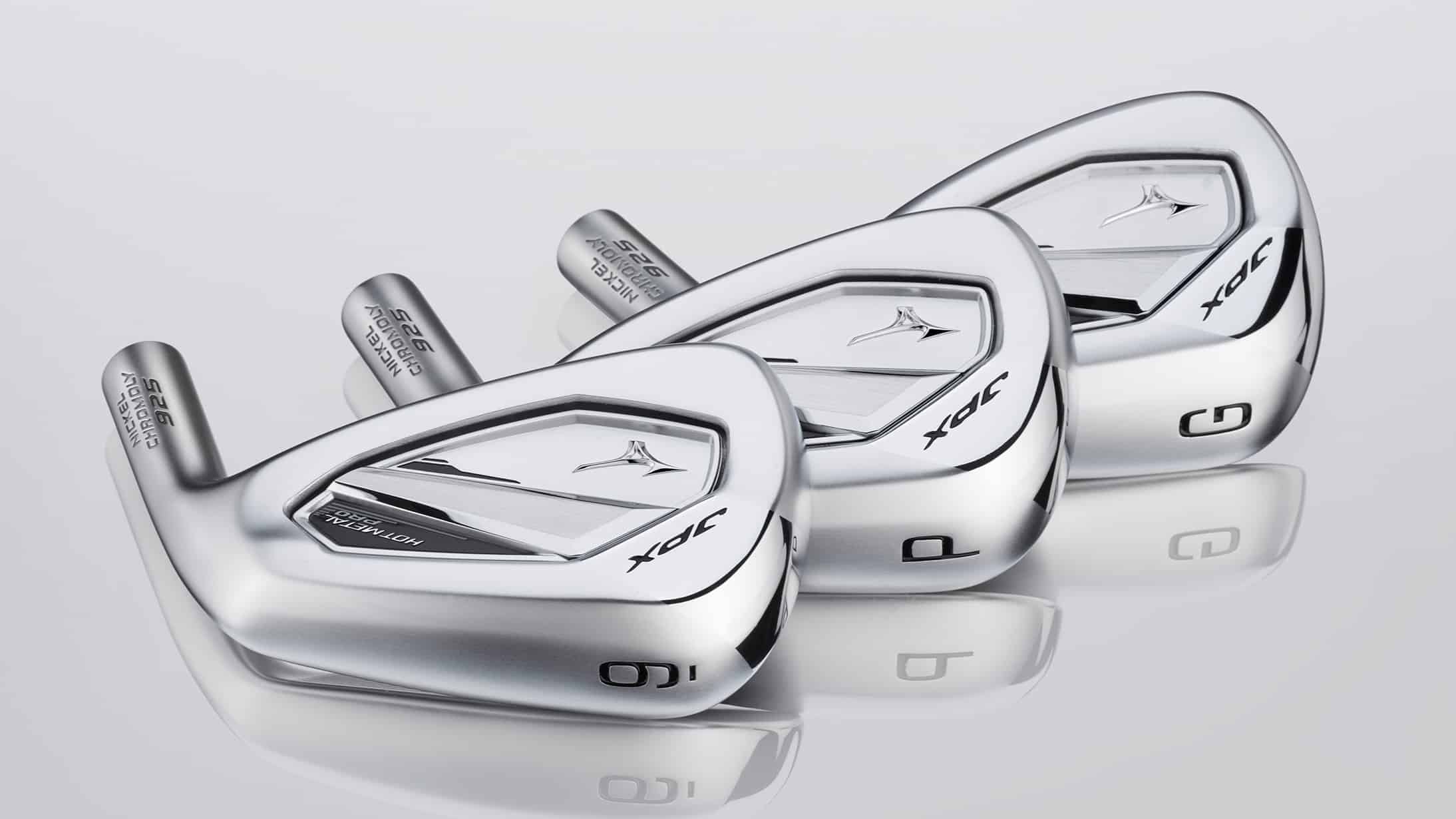
A seamless mug face supplies thinner places around the border, boosting CORAREA (Coefficient of Reparation) for max round rate all over the clubface, while the brand-new multi-material building and construction along with nickel tungsten weighting in the 4-7 irons, produces a much higher launch and also lesser fresh location to gain territory bullets and also enhance green-holding abilities.
The Hot Steel Pro’s variable exclusive fullness also makes it possible for dependable skin flex, improving CORAREA, along with the equilibrium security structure assisting to enhance management and also mercy, giving a sound, tour-preferred feeling and also noise.
The add-on of Harmonic Influence Technology assists to improve the feeling through paying attention to noise during the course of the strike. Finely-tuned scalp geometry gives orderly reviews, along with the Acoustic Noise Ribs strengthening feeling and also the Sound Bar doing away with thin or even clicky regularities.
Mizuno JPX925 Hot Steel Pro: Testing
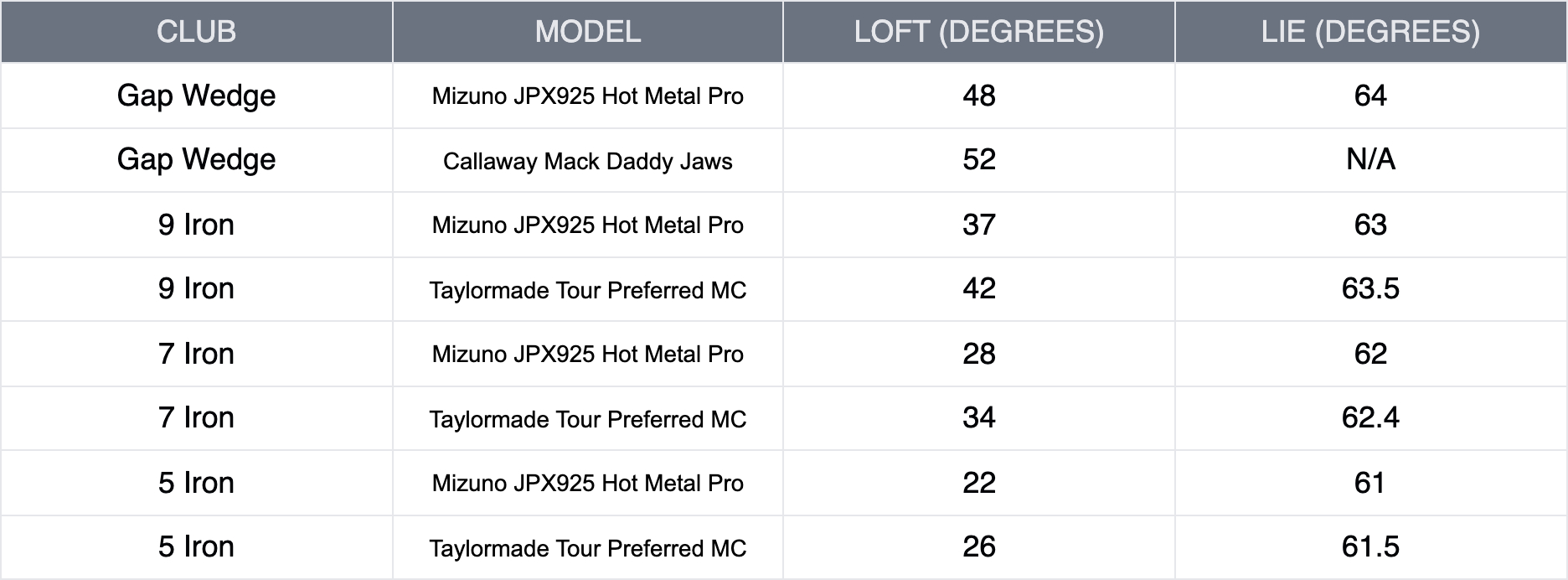
Loft and also Deception Slants — JPX925 Hot Steel Pro versus control
To keep in mind, the Taylormade Excursion Preferred MC is actually the 2011 design.
Performance Stats
During screening, the JPX925 Hot Steel Pro Golf irons revealed exceptional end results. They balanced an 11.8-yard rise in lug span (+8%) and also a 5.35 miles per hour rise in round rate (+4.65%). The launch slant was actually lesser through 3.2 levels (-13.65%), the peak was actually 4.4 feets lesser (-0.04%), and also the touchdown slant deducted 2.25 levels (-4.79%).
These variations could be mostly credited to the differing attic and also are located slants of the management irons: Taylormade Excursion Preferred MC and also Callaway Mack Father Teeth block. Even with this, the JPX925’s functionality metrics are actually particularly exceptional.
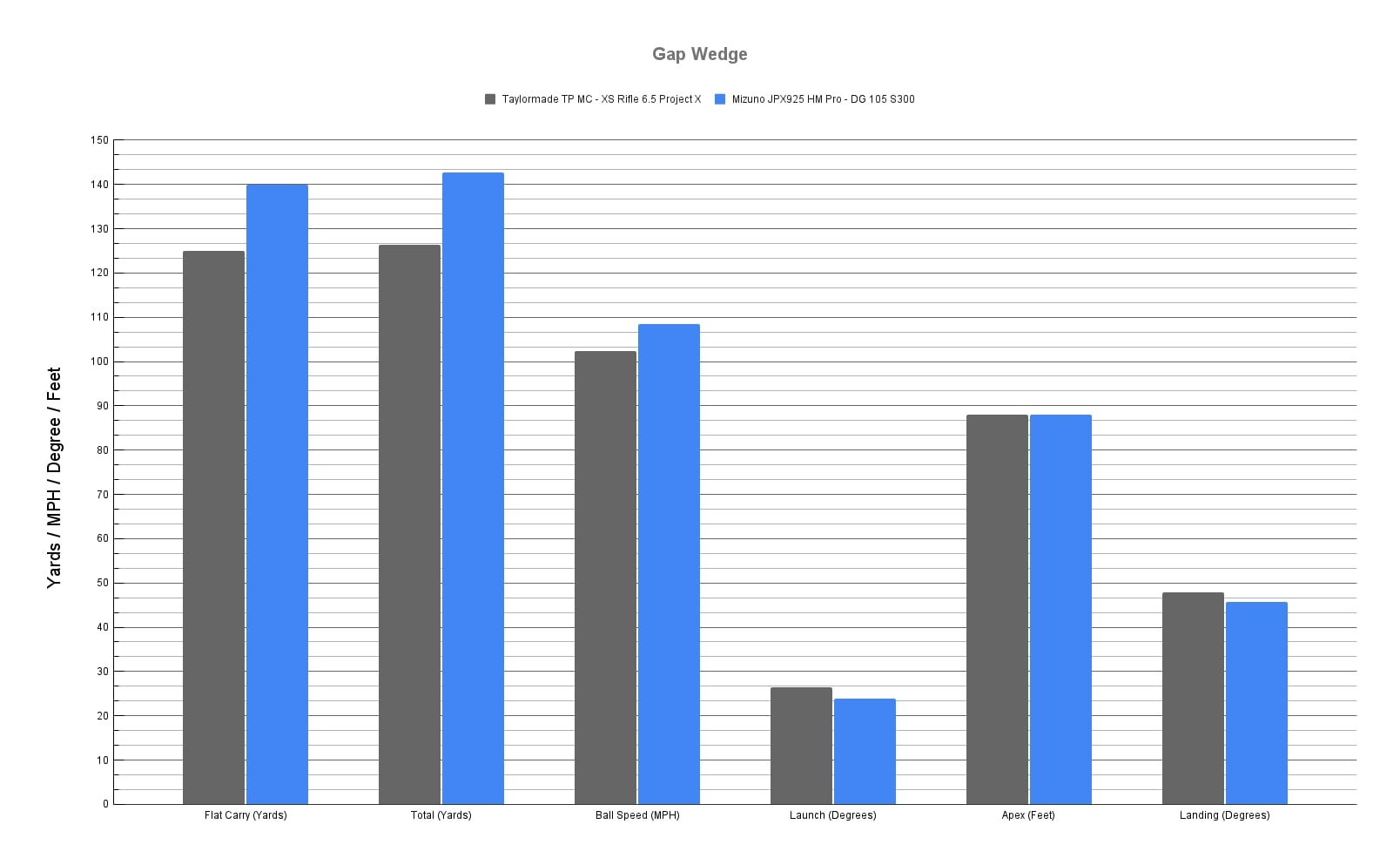
The space block rests at 48 levels — which might masquerade a tossing block — in contrast to my 52 level, which discusses the little variation in launch and also touchdown slant.
However, there was an average increase in ball speed of 6.2mph. Part of this can be accounted for with by the 4-degree difference in loft, but the angle of attack remained consistent throughout testing, pointing to the newly engineered multi-thickness face — which my 52-degree doesn’t have.
The Contour Ellipse multi-thickness face offers a 30% improvement on the JPX923s, with the high toe to low heel face angle helping golfers find improved ball speed and consistency through a forgiving face. This is evident in the stats, seeing an average 5.85% gain in ball speed.
There was also an average increase of 15 yards, from 125 to 140 yards, which is a fairly impressive number for a gap. Understandably, the loft places it very close to a PW. But considering it sits on the line between a PW (44-48°) and a gap (48-52°), the numbers are more than positive.
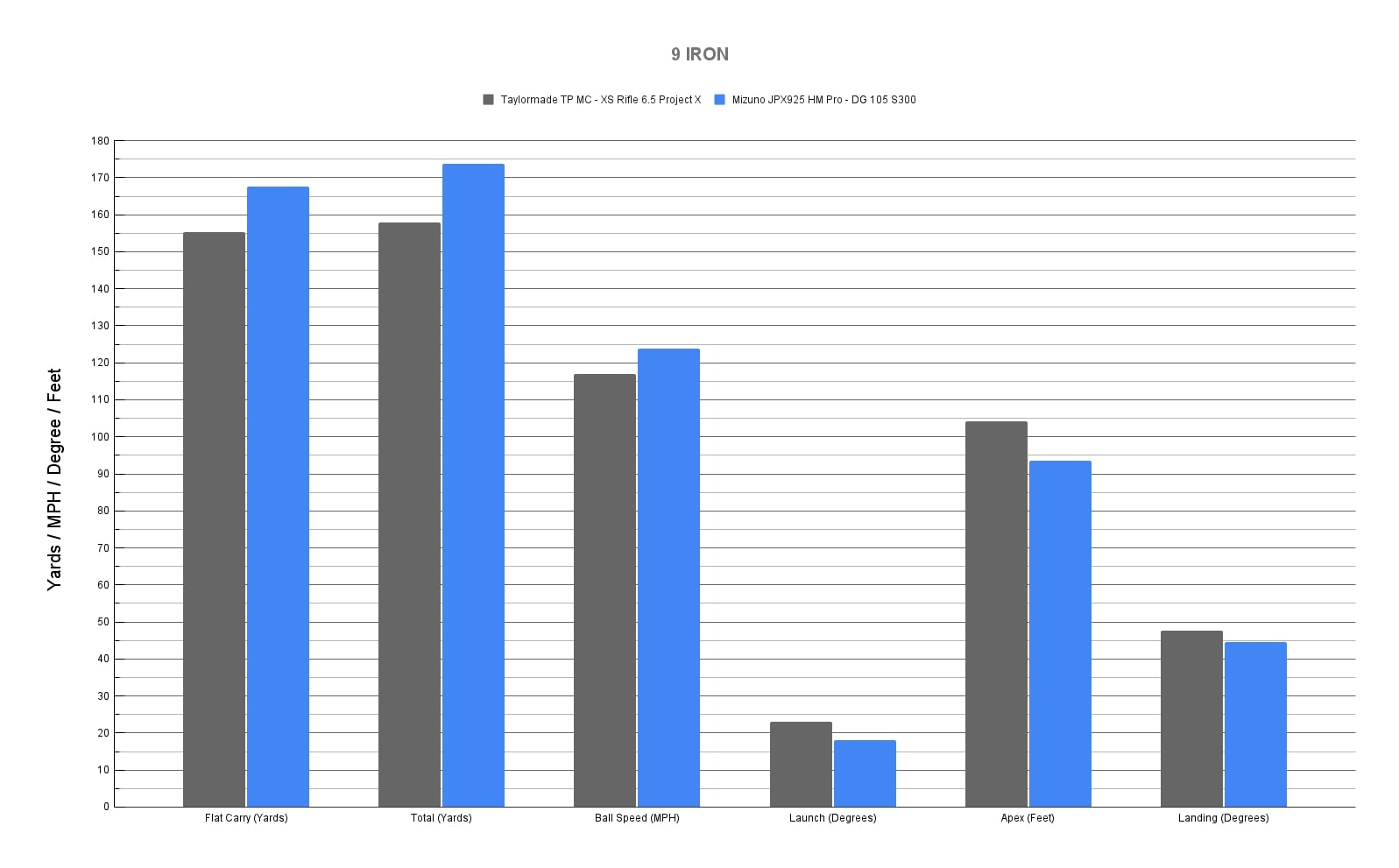
As shown in the loft and lie table above, the Mizuno JPX925 Hot Metal Pro Irons carry a lower loft than the control irons, which is why the distance comparable to the same iron is further and the launch, apex and landing is ever so slightly lower.
The average flat carry distance increase for the 9 iron was 12.4 yards, up from 155.2 to 167.4 yards (+7.98%), while the ball speed was up again on average by 6.8mph (+5.81%).
A lower apex is to be expected with a 5° difference in club. Nonetheless, the average apex for the JPX925 Hot Metal was actually still at 93.6 feet, which according to Trackman, is just 3.6 feet short of the tour average for a 9 iron.
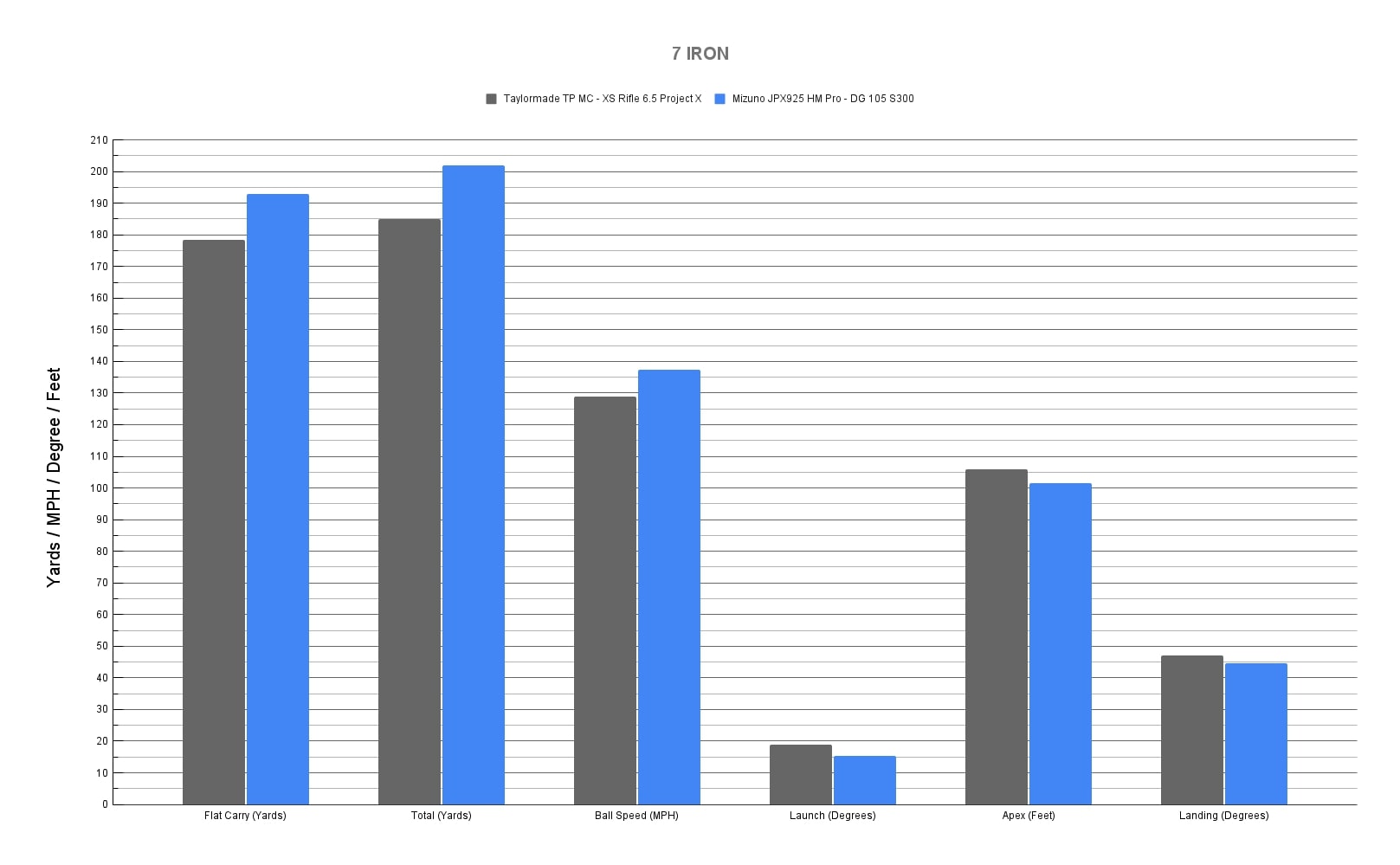
Before we even get to the 5-iron stats, it’s clear to see a pattern forming. As with the 9 iron, the flat carry, total distance and ball speed are up, while the launch, apex and landing degrees are down.
I saw a typical flat carry rise of 14.4 yards, up from 178.4 to 192.8 yards (+8.07%), with a total average distance gain of 17 yards, from 185 to 202 yards.
This correlates with the impressive average increase in round rate of 8.4mph (+6.51%). For every mile-per-hour increase in ball speed, the ball can travel an additional two yards, meaning that by gaining 8.4mph, I would find an extra 16.8 yards. When you look at the average carry and total distance gained, the math isn’t far off.
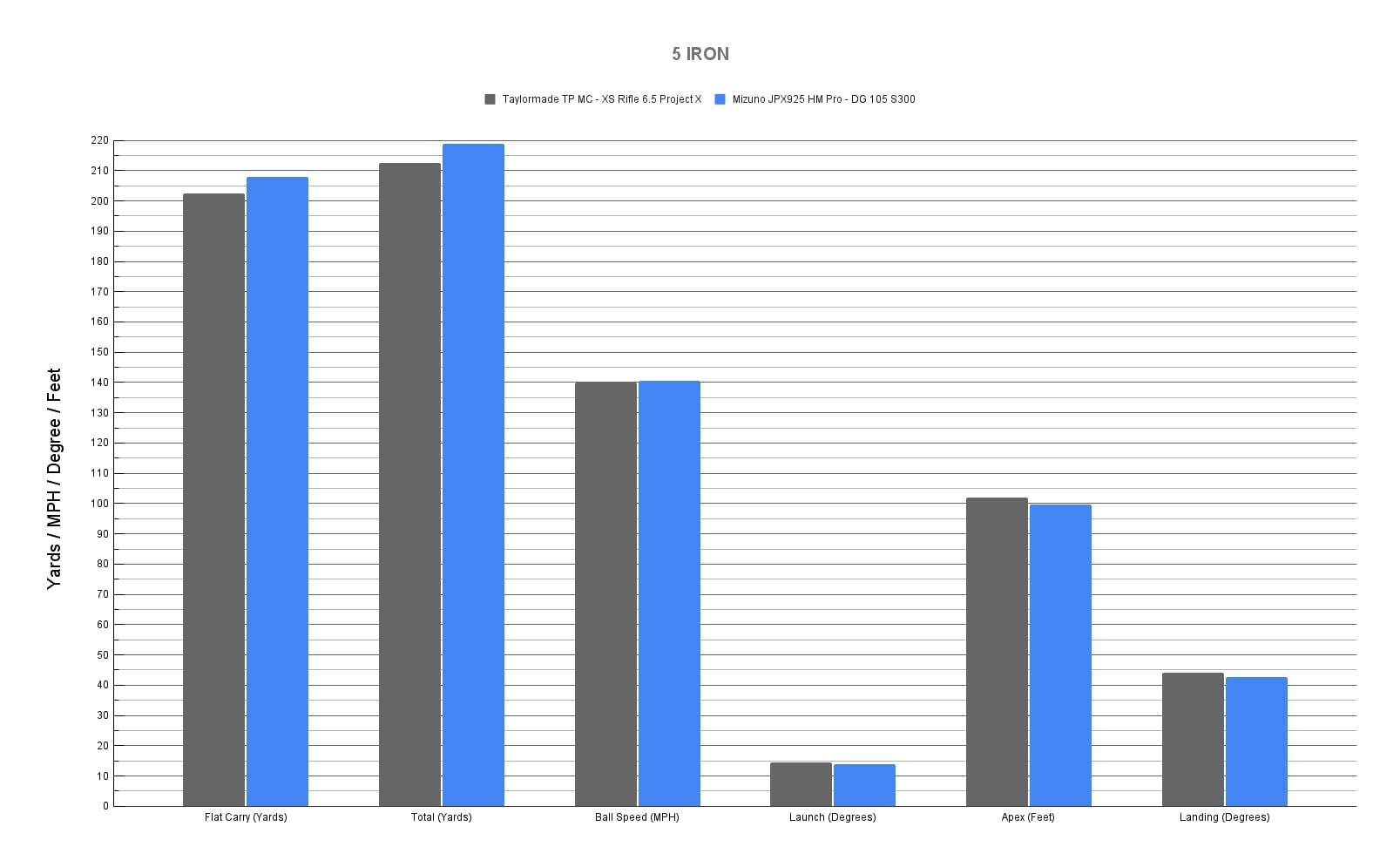
By now, it’s clear to see what the Mizuno JPX925s have to offer. By setting the irons in a lower loft, incorporating a multi-thickness construction and a seamless cup face to increase the coefficient area of restitution, the ball speed is both improved and maintained. The stats show that the distance is up consistently along with only a marginal variation in launch and landing angle.
As mentioned previously, my irons (the control), have a higher attic in comparison to their counterparts. The five-iron loft in the Taylormade TP MC ’11 is 26°, whereas the JPX925 Hot Metal Pro is 22°. So to only have an average launch slant difference of -0.6% (down from 14.6° to 14°) with the 5 iron is a testament to the nickel tungsten weighting found in the 4-7 irons.
This engineering is aimed at helping the high single-figure and mid-to-high handicappers improve their launch and landing angle for better control and green-holding capabilities, while the increased ball speed helps to deliver the added distance many a club golfer is looking for.
Mizuno JPX925 Hot Metal Pro: Look and Feel
The JPX925 Hot Metal Pros offer a visually appealing and confidence-inspiring design. The non-glare white satin brush Finish gives the clubs a modern image while maintaining Mizuno’s traditional look. The wider sole design increases the overall face flex area to provide added forgiveness and as a result, makes the clubs look powerful yet manageable when addressing the ball.
In terms of feel, the weighting of the club is well-balanced, promoting a smooth, rhythmic swing. Pure strikes produce a satisfying sound, with the ball launching crisply off the face.
This design is particularly beneficial for players who struggle with distance from the rough, as the tungsten weighting in the 4-7 irons helps to create a higher launch angle and ensure ample distance — ideal for approaches into the green.
It’s also important to note that not all shots were struck cleanly during the testing — which won’t come as a shock to anybody. This being said, the JPX925 Hot Metal Pros still performed consistently, especially in dispersion rate and shot shape. The forgiveness of the irons is a huge asset, allowing you to trust each club and shot you stand over.
Mizuno JPX925 Hot Metal Pro: Verdict
The Mizuno JPX925 Hot Metal Pro Irons are a smart choice for golfers seeking to improve their iron game. They offer a commendable mix of distance, forgiveness, and a higher ball flight, making them suitable for both game improvement and high single-figure handicappers.
The engineering is cleverly designed to provide a player with the tools they need to grow their game and build confidence on the course. With appealing aesthetics, excellent feel, and regular performance, these irons would be a reliable addition to a large majority of golf bags.
Related: The 18 best golf training aids: Better practice, better golf
The top-rated 18 best golf training aids to improve practice sessions, develop your game and also lesser your mobility.