


Senior Supervisor of Information Scientific Research, where he leads analytics as well as AI efforts for Arccos, golf’s #1 activity monitoring system as well as the Representative Video Game System of the PGA SCENIC TOUR. Hutchinson recently kept analytics management places at Amazon.com Gamings as well as Excellent Video gaming, as well as additionally operated at TuneIn as well as ROI-DNA.
A self-described “information geek,” Hutchinson blended his analytics skills along with his enthusiasm for golf to boost coming from a 10 mobility to damage gamer in lower than pair of years.
He stores an Owner’s Level in Relevant information Control as well as Certification of Advanced Research in Information Scientific Research coming from Syracuse College’s Institution of Relevant information Findings.
***
The Hutchinson story
I recorded the golf pest two times in my live. The very first time was actually as a younger golf enthusiast – I was actually zealous concerning the activity as well as performed regularly. Yet I attacked a stage where I couldn’t seem to be to boost regardless of what I attempted. With no crystal clear course onward or even university employers revealing passion, my disappointment increased.
Eventually, like lots of others, lifestyle took control of. For the upcoming twenty years, I’d participate in possibly a race or 2 annually, however I was actually certainly never severe concerning feeling better. The activity was actually only one thing I utilized to participate in.
Then, prior to COVID, a buddy welcomed me on a men’ excursion to participate in Spanish Gulf. One thing clicked on that time when I birdied 3 of my 1st 5 gaps. As I uncovered my passion for the activity, I was actually impressed through just how much had actually modified in those twenty years away. Release displays, movements got analytics, activity scientific research – immediately there were actually cement methods to gauge as well as boost that hadn’t existed when I was actually much younger.
As an individual that handles information scientific research crews, I ended up being interested due to the tip that I might in fact graph a pathway to renovation making use of information. I plunged deep right into every little thing I can discover as well as utilized these brand-new resources as well as analytics to aid steer my renovation coming from a 10 disability to damage.
My fixation along with golf analytics at some point led me to Arccos, initially as a customer monitoring my personal activity, after that with links in the golf information neighborhood that unlocked to my existing part. Right now I come to operate at the junction of my specialist skills as well as individual enthusiasm, assisting various other golf players utilize information to boost their video games.
When you blend information scientific research along with the activity of golf, you begin to find designs as well as chances for renovation that may typically go undetected. That’s what rides me on a daily basis within this part – making use of information to aid golf players at every degree comprehend as well as boost .

***
What was actually the origin in carrying out the proximity file?
In 2019, our experts released our 1st Proximity Document to address among golf’s best concerns: just how much perform golf players definitely steer the sphere? Utilizing our dataset of actual golf players, our experts gave useful situation to this timeworn interest.
Since then, our information has actually developed considerably, right now consisting of over 1.2 billion tracked gos as well as 180 thousand vehicle driver gos. The Arccos Proximity Document possesses come to be the most extensive as well as very most correct evaluation in the golf market, giving unequaled ideas right into what occurs off the tee.
What were actually the absolute most exciting seekings?
The partnership in between grow older, mobility, as well as steering proximity stood out. While our information presents the normal male golf enthusiast steers it 225 lawns as well as the normal women 178 lawns, the actual account resides in the sections.
A scratch golf enthusiast in their 20s standards concerning 260 lawns, while a scrape golf enthusiast in their 50s standards concerning 240 lawns. What’s intriguing is actually just how regularly these designs turn up throughout various disability degrees – it’s certainly not almost grow older or even almost capability, however just how these variables interact to affect proximity.

In what details methods carries out the information offered through Arccos aid boost gamer efficiency?
At current, the Arccos system pays attention to complete proximity, in order that’s what our experts reference in the file. This partnership in between hold as well as complete proximity differs substantially based upon course/environment disorders as well as the golf enthusiast’s launch attributes.
Golfers who launch the ball low will tend to get more roll, but that can be offset by a soft course. The most effective drivers of the golf ball are able to use the characteristics of the course and environment to their advantage.
What’s your assessment on the USGA and R&A ruling for a golf ball roll back starting in 2028 for elite golfers and in 2030 for all others?
Arccos’ role within the golf industry is to present objective data that provides helpful context to a wide variety of important discussions.
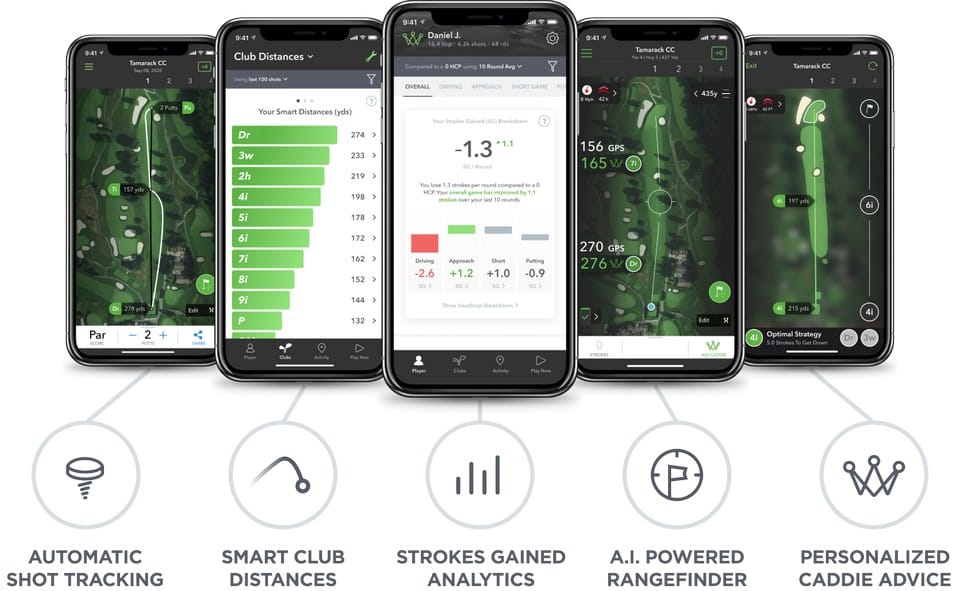
The report itemizes a range of factors tied to driver shot distance — specifically course set-up. Can you explain that in greater detail?
Course setup refers to the various environmental and course-specific conditions that can impact driver shot distance. These include factors like fairway firmness, grass maintenance, moisture levels, and the placement of hazards such as bunkers or penalty areas.
To account for these variables, Arccos provides members with Smart Club Distances, which filter out outliers like mishits, and unusually long shots to show your ‘true average.’
By normalizing and analyzing this data with advanced algorithms, Arccos delivers precise, personalized distance measurements, helping players make smarter, more informed decisions from the tee, regardless of course conditions.
Age and skill level are also cited. Can you briefly outline the impact of each?
Age and skill level are two big levers that influence distance. Younger golfers—often more flexible, stronger, and capable of generating higher swing speeds—tend to hit it farther.
As we age, natural strength and speed tend to decline, meaning a 20-something scratch golfer might average 260 yards, while a scratch golfer in their 50s might average closer to 240.
Skill level matters just as much: lower-handicap players usually have more consistent contact and better swing mechanics, enabling them to maximize their launch conditions and get more out of their drives compared to a higher-handicap player at the same age.
Given the findings from your report, what would be the appropriate length of a golf course for men hitting the ball 225 yards and women 175 yards off the tee?
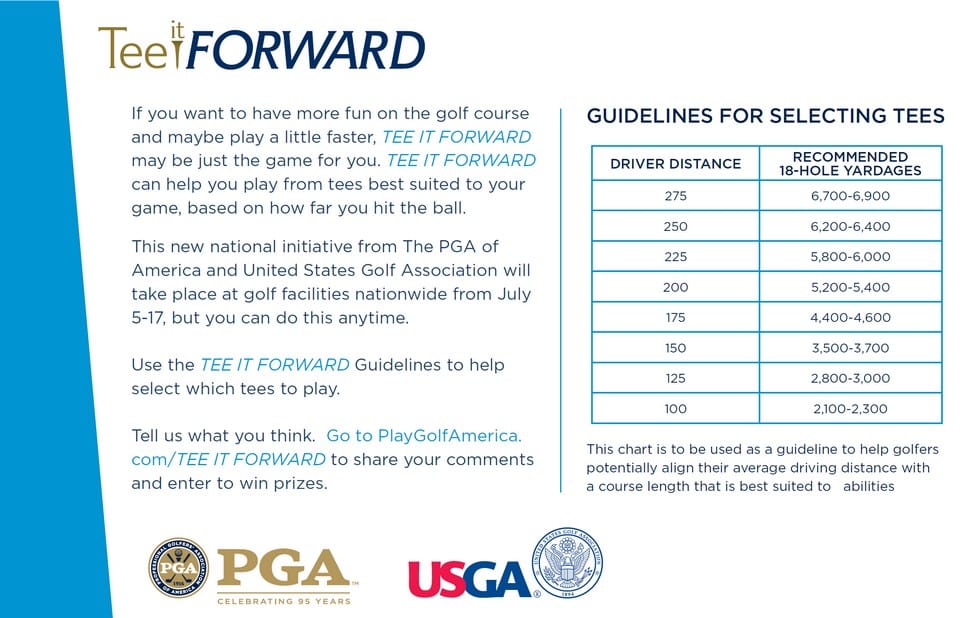
Looking at the standard “Drive x 25” formula, a golfer driving it 225 yards would be best suited for a course around 5,625 yards, while someone averaging 175 yards should play from about 4,375 yards. The PGA of America and USGA’s “Tee It Forward” program makes similar recommendations.
It’s also worth noting that while the old rule of thumb was “5-iron distance x 36,” with modern club lofts “7-iron distance x 36” is probably more appropriate today. Either way, most golfers would have more fun and play faster if they moved up a set of tees.
Given the information the report provides — If you could change one thing in golf unilaterally – what would it be and why?
I’d standardize how we measure golfer performance and improvement. Rather than using traditional stats like fairways hit or putts per round that don’t correlate well with scoring, I’d love to see every golfer have access to strokes gained data.
We have the technology now to show players exactly where they’re losing strokes and what to work on, but too many golfers are still using metrics that don’t help them improve.
Of course, to get this game changing data you need to track your game. And Arccos is the easiest, most seamless way to do it. When you can measure something effectively, you can improve it.
The biggest challenges facing Arccos – short and long term — is what?
Arccos’ challenge is game tracking education and helping golfers embrace data to improve. Many still rely on the “old way” of manual tracking or memory, which are imprecise and incomplete. Arccos is the “new way” by eliminating guesswork with seamless tracking and personalized insights, helping golfers improve by 5.71 strokes in their first year.
Looking ahead, the goal is to make data-driven improvement a standard for all golfers, not just elites. By advancing technology, fostering education, and expanding adoption, we aim to make smarter golf accessible to everyone.

What specific steps are being implemented to deal with each?
Arccos is dedicated to making game tracking simple, accessible, and impactful for golfers of all levels. Through ambassadors like Matt Fitzpatrick, content creation with Erik Anders Lang, and partnerships with OEM’s like PING, Taylormade and Cobra plus the PGA TOUR, we showcase how Arccos transforms improvement with seamless tracking and personalized insights. Golf players can track their game on their terms—using a phone, Apple Watch, or Link Pro—minimizing in-round distractions while delivering powerful post-round data.
Long-term, Arccos aims to expand our partnerships to help make data-driven improvement a standard across golf, advancing A.I. technology and fostering adoption from professional tours to amateur players. By championing a “smarter game,” we strive to transform the golf industry.
How much would the typical golfer improve by adding 10 yards off the tee?
If you’re able to consistently add 10 yards off the tee for all 14 of your drives per round, the cumulative effect is even more meaningful than it might first appear. Based on our Strokes Gained analytics for a 10-handicap golfer, an additional 10 yards off the tee has about 0.05 strokes of value per drive.
Over the course of a round, this effect would translate into roughly three-quarters of a stroke saved. It doesn’t sound like much, however that’s often the difference between posting your usual score or walking off feeling like you’ve just recorded one of your better rounds of the season.

What are the most common misconceptions golf players have about their game that Arccos data helps debunk?
One major misconception is actually the influence of birdies versus big mistakes. Scratch golfers make about three times more birdies than a 10-handicap (2.2 vs. 0.7 per round).
However, the real difference lies in avoiding double bogeys or even worse. Scratch golfers standard 0.7 per round, compared to 2.9 for 10-handicaps—a 4x difference. Reducing big mistakes is key to lowering scores.
***
For even more information go to:

Related: Sam Hahn interview
CEO L.A.B. Golf. Lie Angle Balance (L.A.B.) is actually a patented innovation that streamlines placing.