

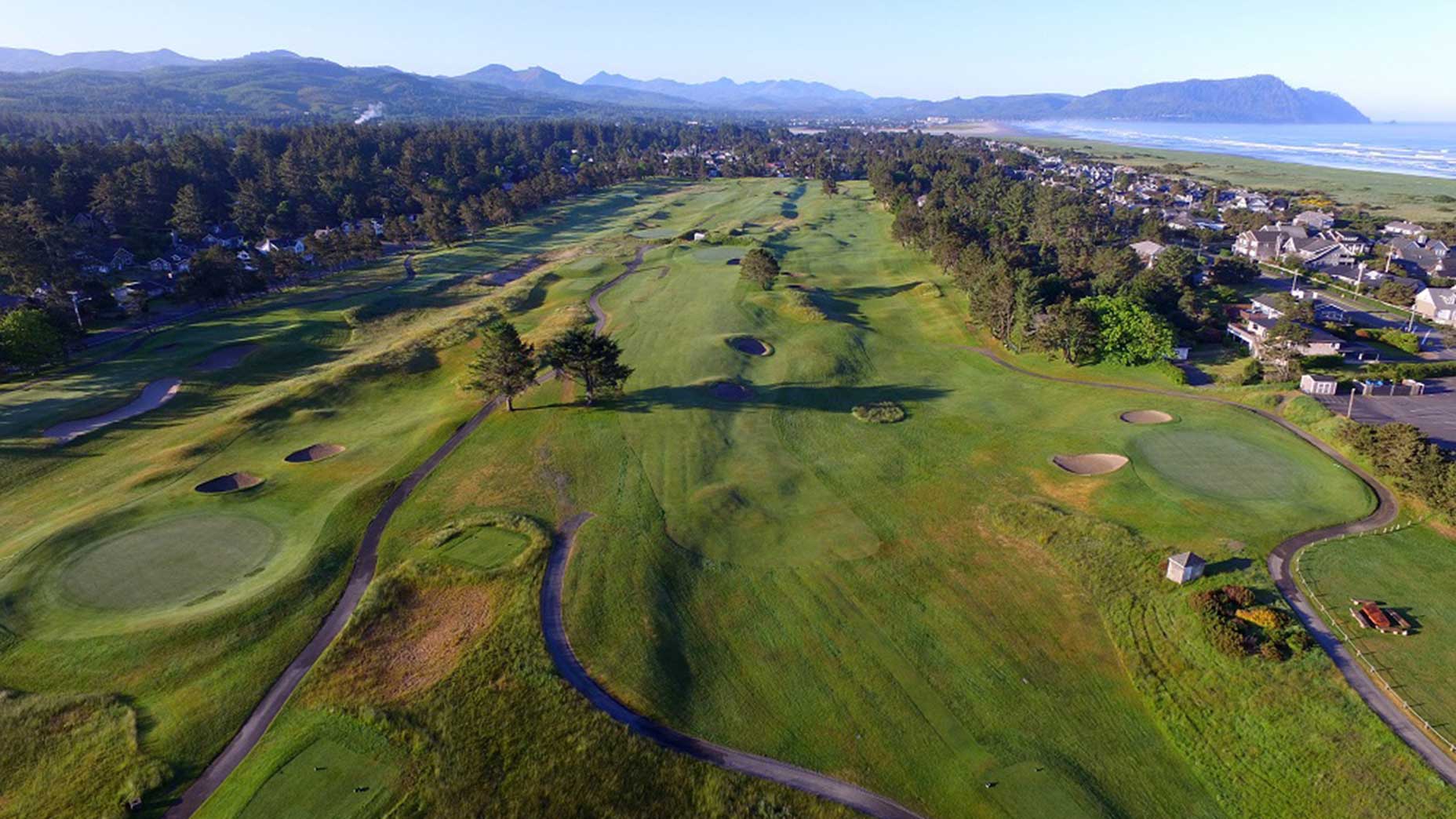
As I pivoted the ultimate bend in the roadway to the Gearhart Golf Links — presto! — “Ireland” emerged. A hint of amazing and also wacky golf gaps running by means of the dunes. The historical resort commanding the program. Flagsticks angled and also ruined through a worthless west wind whimpering off the ocean. I hadn’t also tipped feet on the residential property and also Gearhart possessed me under its own streak.
Contrary to public opinion, Bandon Dunes doesn’t store the license for real hyperlinks golf on the Oregon coastline. (Although along with 5 18-hole training programs, it could be the master of it.) While historical Gearhart — a lovely little bit of hyperlinks found roughly 6 hrs north of Bandon near Astoria — might not arrive at “regal” condition, felt confident, it doesn’t long to. That’s certainly not in its own DNA. What is actually? Grassroots, traditional, bare and also entirely adorable hyperlinks golf that are going to possess you in a hypnotic trance prior to you also draw right into the parking area.
But first this disclaimer: Gearhart is NOT a few things you might expect. For example, Gearhart is not a big, burly beast the likes of Old Macdonald (arguably the toughest track at Bandon) or Chambers Bay (site of the 2015 U.S. Open in neighboring Washington). Gearhart is relatively benign — just 6,551 yards from the tips — and loaded with short-and-sweet par-4s where your wedge game will work overtime.
Andrew Penner
In addition, the course is tight, laid out on a tidy 100-acre plot. Adjoining fairways are close. The greens are small and that massive scale that characterizes many famous links is not a Gearhart trait. Yet sporty, wonderfully walkable and “doable” for the average weekend warrior are trademarks. In an endorsement from a few years back, golf legend Peter Jacobson, who has close ties with the region and the course, said, “You may well have the best round of the year at Gearhart.” And this isn’t a stretch. Birdies can be plentiful. But, make no mistake, Gearhart is actually not a pushover.
It’s also not a hard-on-the-sea links with dramatic ocean views at every turn. The Pacific Ocean, although just a block or so away from the course, cannot actually be seen from the property.
“If we were right on the water, our green fee would probably be north of $250,” says Jason Bangild, the GM/director of golf at Gearhart. “But we’re right in that sweet spot at $100. ($150 in summer.) We’re the links course for everyone.”
And, not surprisingly, given the fun-loving and trendy vibe of the place, everyone, including non-golfers, seems to want to hang out at Gearhart. The everyone-is-welcome Sand Bar — the new halfway house neatly tucked in the dunes near the 9th tee — is clearly a happening place. Live music, putting contests on a putting course and tasty food and drink are a winning formula there. On the weekends, especially, it’s packed.
;)
Don Frank
At the Gearhart Hotel (34 rooms), which is leased to a third party, McMenamins, the “Irish” atmosphere has a magnetic pull. Hunker down by the fireplace and sip a Guinness in the charming and tiny Pot Bunker Bar and you may think you’re at some far-away links in County Mayo. Yet, funny enough, Gearhart’s sister course is the spectacular Carne Golf Links in that wild and remote county in western Ireland. The members of both courses have playing privileges at either. (Membership at Gearhart is currently full and there is a short waiting list. Tee times for guests and visitors are readily available.)
Similar to Carne, Gearhart also has a rich history. It is, in fact, the oldest golf course in continuous operation west of the Mississippi River. They’ve been playing golf at Gearhart since 1892 — that’s 144 consecutive years.
Originally a three-hole course for guests of the old hotel, Gearhart expanded to nine holes in 1901 and became an 18-hole layout in 1913. Then, in the early 1930s, local superstar amateur golfer and architect Chandler Egan redesigned the golf course. For decades Gearhart was a pretty parkland test with narrow, tree-lined fairways and a decidedly different character than it has today. (Gearhart is owned by Tim Boyle, CEO of Columbia Sportswear.)
“In 2013 Gearhart was completely transformed,” says Bangild, who has now been at the club for 13 years. “The trees were dying and getting near the end of their life cycle. Our ownership team decided the best plan forward was to remove the vast majority of the trees and re-establish Gearhart as a true, wide-open links. In other words, return Gearhart to its roots and give it back its true, natural character. It was a gamechanger for us.”
;)
Andrew Penner
As you might anticipate, wild undulations, uneven lies, gnarly fescue rough and wicked winds are Gearhart’s main defense.
“Even on a calm day, you don’t want to underestimate this place,” says Bangild. “The 18th hole plays uphill and into the wind. It’s 640 yards from the back tee. There are days when powerful, low-handicap players simply can’t get there in three shots. It’s actually one of the hardest holes I’ve ever played.”
Thanks to the difficulty of that meaty closing hole, Gearhart has a long-standing “Feed the Pig” tradition. Basically, if you put a dollar into the cast-iron piggy bank in the pro shop you’ve entered the sweepstakes.
“Long story short, if you birdie the 18th you win the pot,” says Bangild. “It’s on the honor system. You play the tees you normally play. Every week, or so, someone takes home the bacon.”
While saving a trio of good swings for the finish is highly recommended, there are other holes that also require powerful and precise play. As an example, the 428-yard 12th, which dips down the hill before rising to a small, undulating, bunker-guarded green, demands two high-quality shots. And the 371-yard 14th, which is actually funneled through a natural half-pipe, is actually, perhaps, the coolest and also quirkiest test on the course, along with a green that’s small, raised and difficult to hold.
However, at the end of the round, given the many “getable” holes at Gearhart, you’ll likely add up a number you’ll be quite pleased along with. I’d say that’s worth something. And, for that matter, so is playing an awesome “Irish” program in America.
Andrew Penner is actually a freelance writer and also photographer based in Calgary, Alberta. You can easily observe him on Instagram at @andrewpennerphotography.