

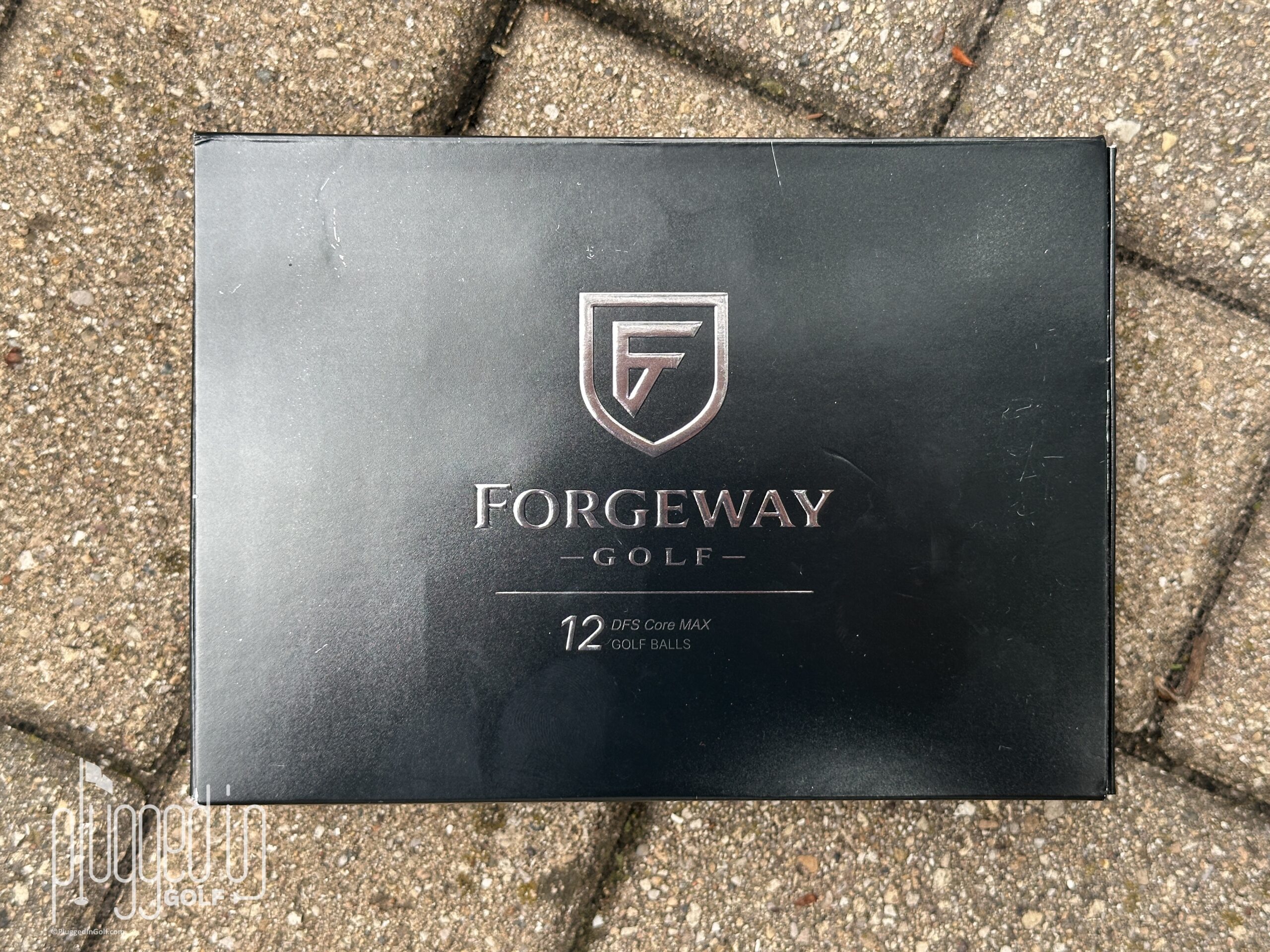
50 Words or Less
The Forgeway golf ball offers premium feel at a very affordable price. High spin around the green and above average spin in the long game.
Introduction
Most direct to consumer (DTC) golf balls are all about price. They’re claiming to be the same as Brand Name Ball X but at a better price.
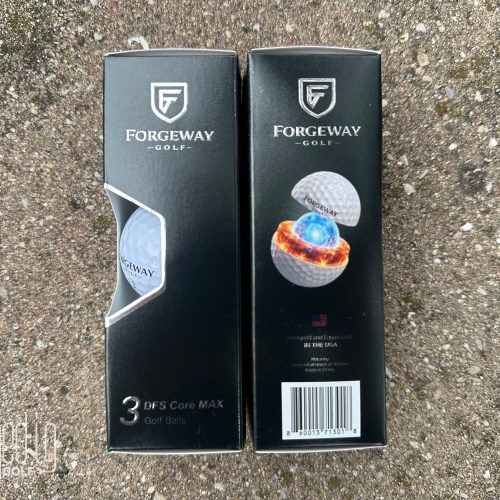
The Forgeway golf ball is different, claiming a technology story all its own. They tout “a re-engineered inner core for longer drives, straighter shots, and unmatched durability.” They’re even willing to put numbers to it, boasting of “67% less hooks and slices” and “12-23 extra yards.” With claims like that, I had to test them for myself.
Feel
When I read “straighter shots” and “longer drives,” I immediately thought that the Forgeway golf ball was going to be a range rock. A closer look at their website revealed that this is a urethane-covered ball, so my hopes for the feel rebounded. Starting on the green, I found that the Forgeway golf ball produced a truly premium sound and feel. It’s very soft, teetering on the marshmallow softness of the Callaway Chrome Soft [review HERE]. The sound isn’t quite a thud, but it’s not crisp either.
Taking the Forgeway golf ball to the short game area, that premium feel continued. It is decidedly soft. It’s not “melt into the club face” soft, but that’s too soft for most players, anyway. The sound is muted and quiet unless you slap it off the edge of the face or the bottom groove.
Short Game
Despite knowing that the Forgeway golf ball has a urethane cover and really great feel, I could not shake the suspicion that it would be low spin. There was no other way I could make sense of their claims about more distance and straighter shots. But that’s what the testing is for: to get the real data.
From the first swing on the launch monitor, my suspicions were proven wrong. The Forgeway golf ball produced very good short game spin, well within the normal range for a Tour-style golf ball. From pitches to full swings, the wedge spin was high. I will note that it was on the lower side of the Tour ball range, but this is a difference I would call measurable, not noticeable.
I’ll add here that I did not notice any scuffing on the Forgeway golf ball, either in launch monitor testing or on the course. Forgeway states, “most golfers player 4-6 rounds per ball before noticing visible wear”. That seems a little ambitious, but so is the idea that I could play six rounds without losing a ball. [See Price / Buy]
Long Game
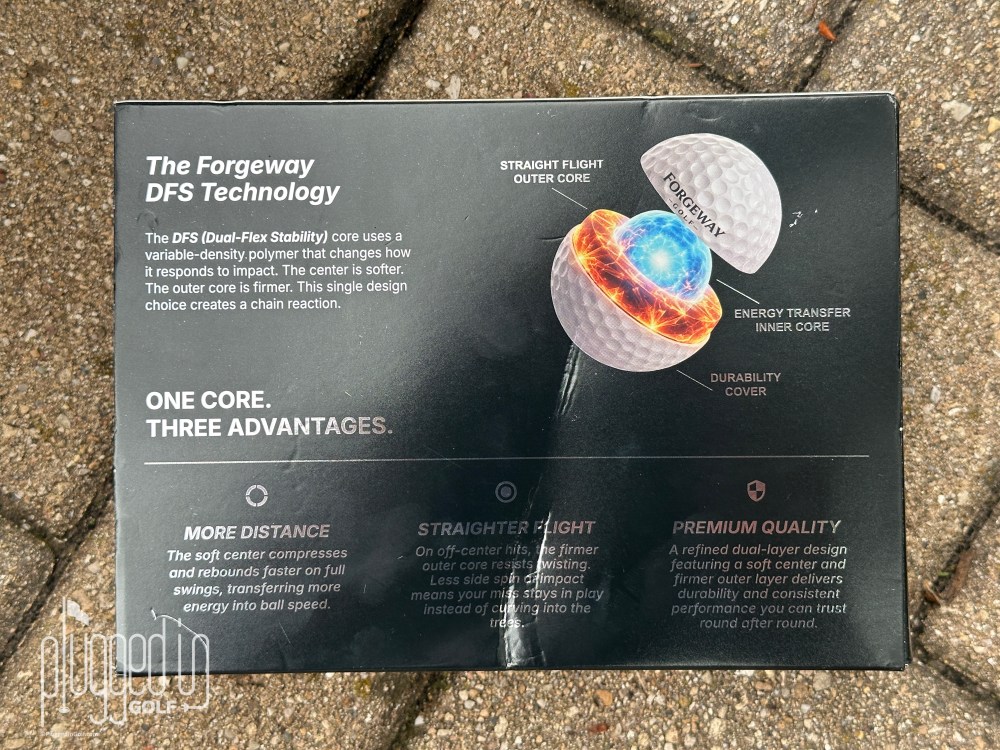
The long game is where Forgeway’s big claims come into play. They claim that their Dual-Flex Stability (DFS) Core, a polymer with a softer center and firmer outer portion, transfers more energy on full swings for more distance and resists twisting on mishits for straighter flight. Specifically, they claim “12-23 extra yards” and “67% less hooks and slices.” Finally, they state, “The DFS core is engineered to compress at every swing speed” – from 70 MPH range to over 110 MPH – but that “most testers see the biggest gains between 80 and 100 MPH”.
On the launch monitor, I saw the Forgeway golf ball produce above average spin throughout the long game. With the irons, it was a difference of a 200-400 RPM, which I would put into the measurable category, just as with the wedge spin. Turning to the driver, fairway woods, and hybrids, the gap was a similar 200-300 RPM, which starts to verge on noticeable, particularly with the driver. More importantly, I did not see the Forgeway golf ball hitting the peak ball speeds of my best-fit Tour balls. The difference was not large, just 1-2 MPH, but that’s not something most golfers want to give up.
While I don’t put a ton of weight into on course testing because of the smaller sample sizes and uncontrolled environment, I will share my experiences there. My ball flight with the driver was close enough to normal that I didn’t feel the Forgeway was a significant plus or minus. I was hitting my normal iron distances, though I did have two approach shots jump in the slightly wet conditions. Whether this was the ball or the conditions, I can’t say – again, this is why I prefer launch monitor data for ball testing.
Overall, nothing in my testing supported Forgeway’s claims of great distance and straighter drives. It’s worth noting that my swing speed is outside their “biggest gains” range. Based on my testing, the only way that a player would see longer, straight shots is if they were very low spin.
Rimac Compression Data
Forgeway Golf Ball – 24 balls tested
Average Compression: 84.5
Median Compression: 84
Maximum Compression: 98
Minimum Compression: 75
I’ve done Rimac testing on several golf balls, and the gap between the minimum and maximum compression on the Forgeway golf balls is the largest I’ve seen. With the four Bridgestone Tour B models, the gap ranged from 11 to just 5 [full review HERE]. While I haven’t done any conclusive testing on the importance of compression rating, seeing this range is a bit troubling. [See Price / Buy]
Conclusion
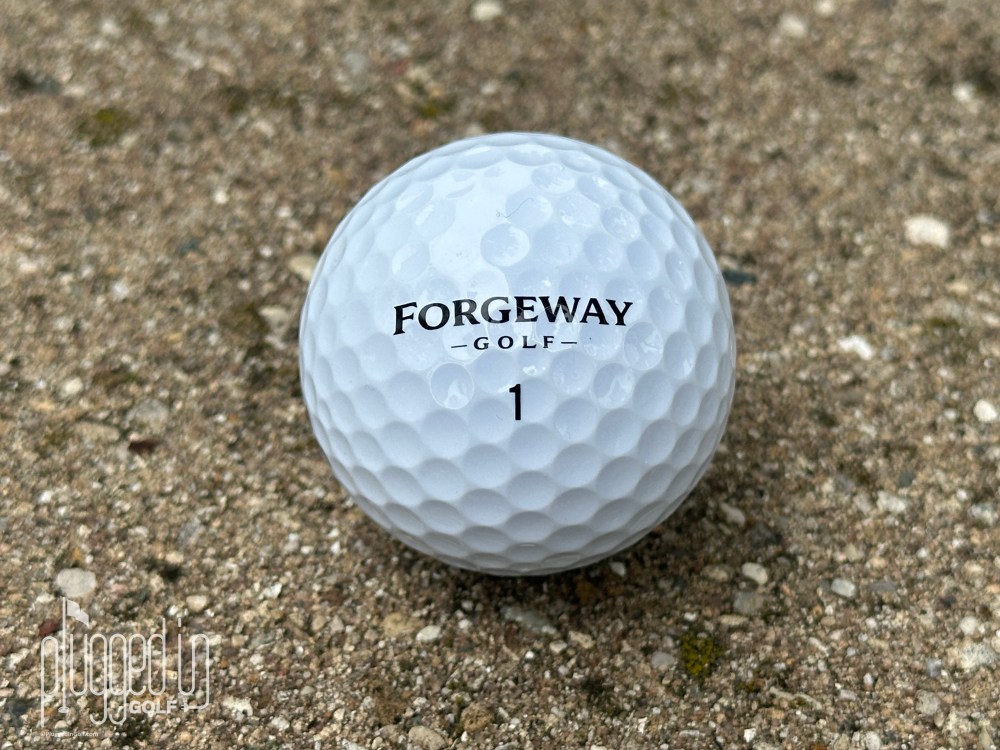
Priced as low as $1.96 per ball (when you buy two dozen), the Forgeway golf ball is much more affordable than the big names. They also offer a 30 day money back guarantee. While I did not see the benefits they claim, this is a great feeling golf ball with ample spin around the green. If you want or need high spin in the long game, too, this could be a ball worth trying. [See Price / Buy]
Help support our mission. We earn a commission if you make a purchase, at no additional cost to you.

Editor In Chief at Plugged In Golf
He founded Plugged In Golf in 2013 with the goal of helping all golfers play better and enjoy the game more.
Matt lives in the northwest suburbs of Chicago with his wife and two daughters.